
Art Therapy Studios: A Creative Route to Emotional Healing
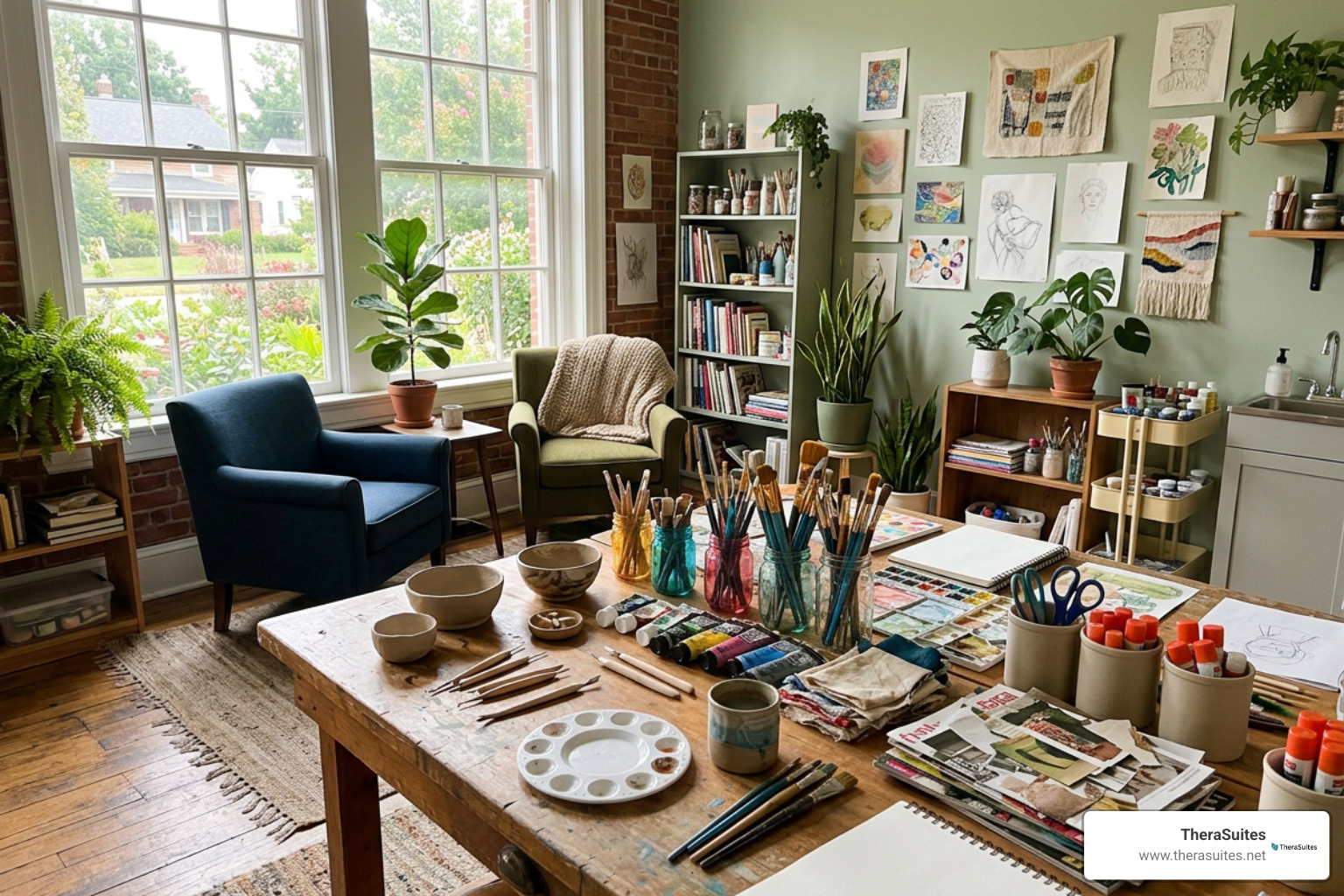
Art therapy studios are professional spaces where people use art materials, guided by a qualified therapist, to explore emotions, build coping skills, and support mental health. You do not need artistic talent. The goal is not to make impressive art. It is to use drawing, paint, clay, collage, or other materials as another way to communicate and reflect.
For many people, making art can offer a gentler starting point than talking face-to-face about painful experiences. A session may include conversation, art-making, or both. The therapist helps the client set the pace, choose materials, and connect the creative process to their goals.
Modern studios can provide individual therapy, family sessions, groups, virtual care, and community programs. The best ones are designed to feel safe, accessible, and low-pressure, with clear consent, sensory awareness, and respect for each client's identity and needs.
For clinicians building a private practice, an art therapy studio also needs practical foundations: a professional, welcoming setting, room for supplies and confidential sessions, and flexibility to serve clients well.
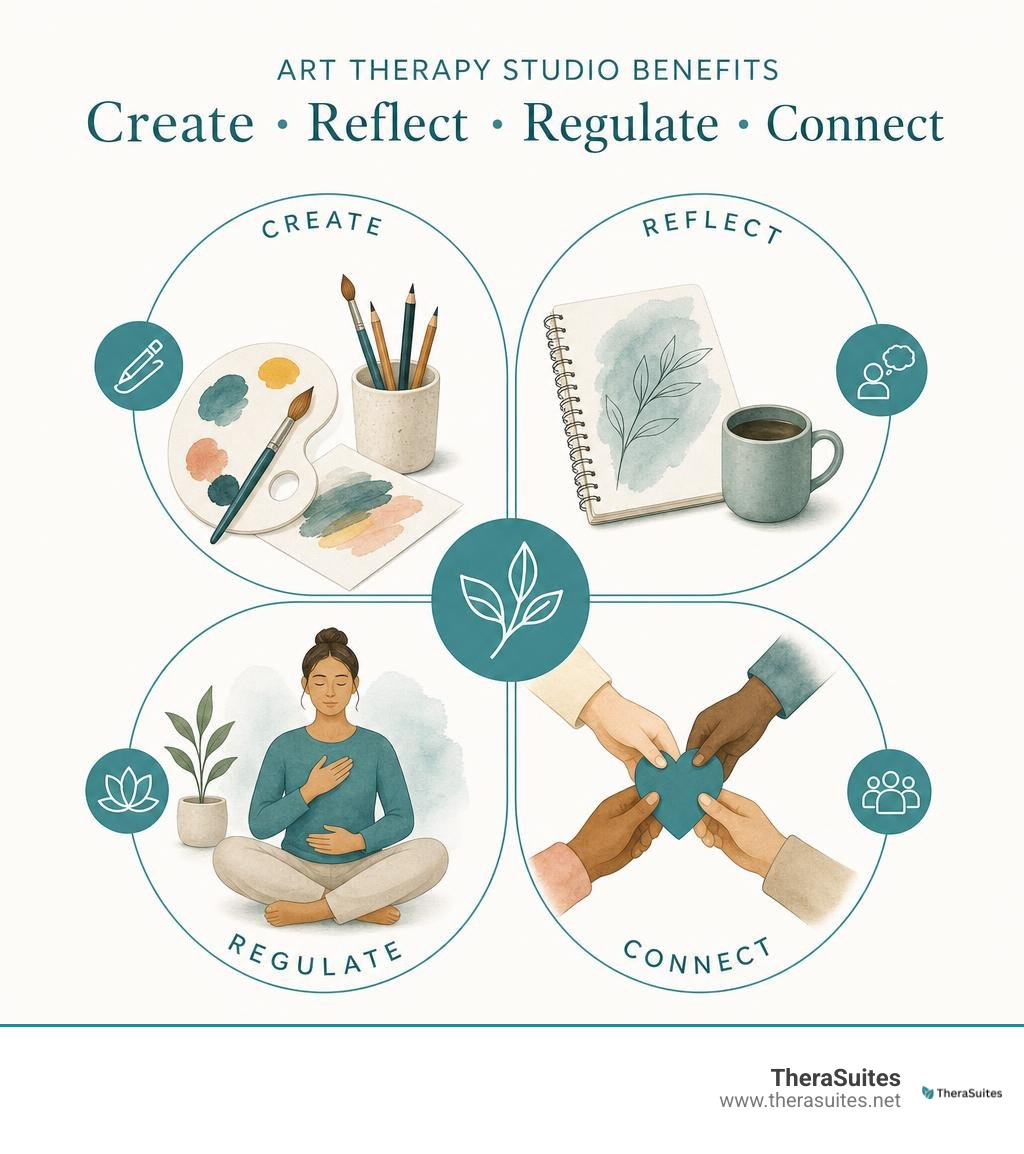
Understanding the Role of Modern Art Therapy Studios
Modern art therapy studios bridge clinical mental health treatment and human creative expression. Unlike casual recreational painting workshops or social "paint-and-sip" nights, a dedicated art therapy studio is a healthcare setting. Sessions are facilitated by master’s-level, credentialed mental health practitioners trained to guide clients through psychological processing, somatic grounding, and nervous system regulation.
In these intentional spaces, clients are often viewed as "client-artists." This terminology reframes the therapeutic dynamic, shifting away from pathologizing diagnoses toward personal agency, resilience, and collaborative exploration. Creative studios provide a sanctuary where individuals process intense emotional experiences without relying exclusively on linear conversation.
| Feature | Traditional Talk Therapy | Art Therapy Studio Sessions |
|---|---|---|
| Primary Medium | Verbal dialogue and cognitive processing | Mixed media (paint, clay, collage) combined with dialogue |
| Physical Setup | Direct face-to-face seating in consultation chairs | Work tables, easels, wash areas, and flexible seating |
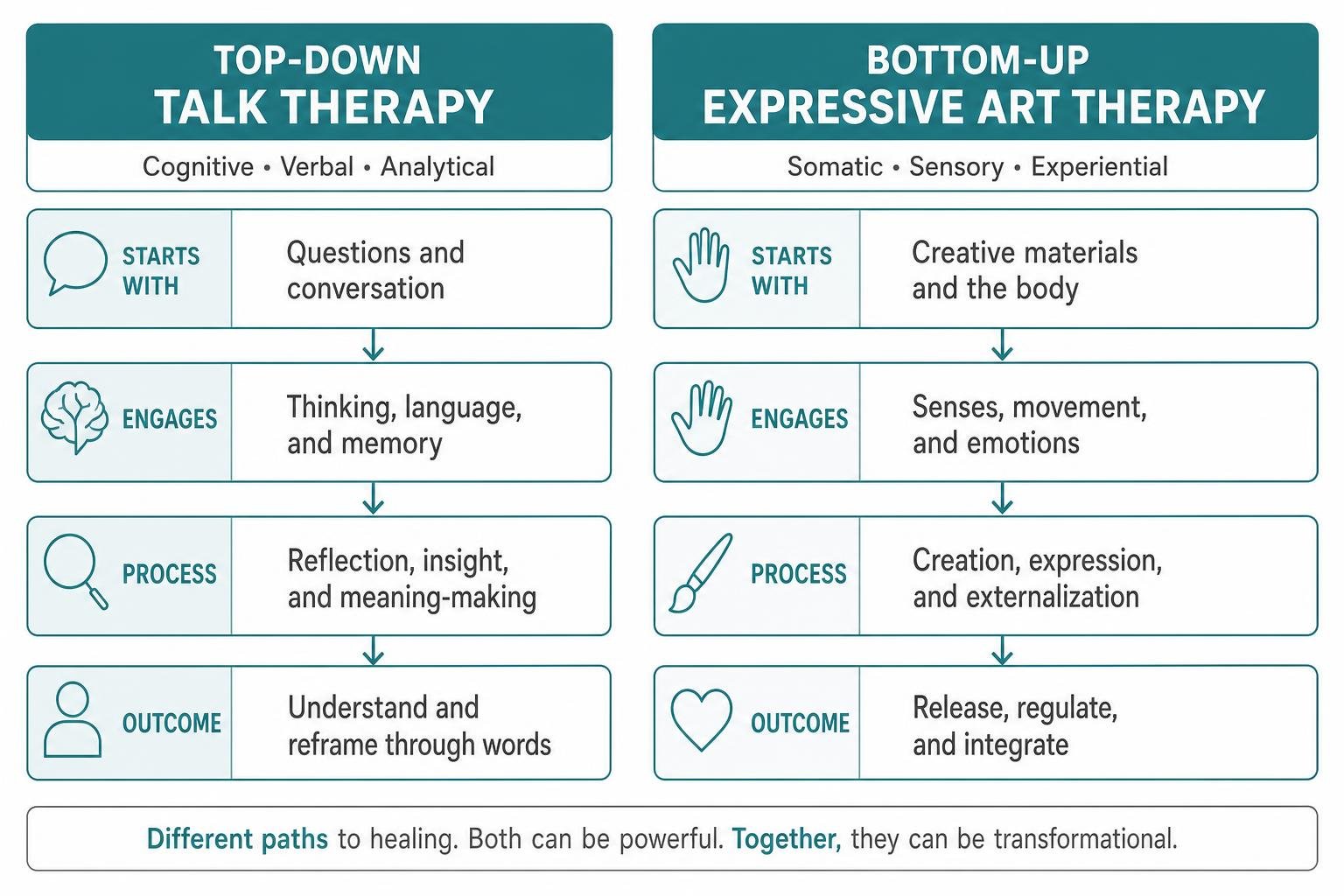
| Processing Style | Top-down cognitive reflection | Bottom-up somatic, sensory, and non-verbal externalization |
| Focus | Articulating thoughts and behavioral patterns | Exploring internal states through the creative process |
| Engagement | Relies on verbal recall and vocabulary | Bypasses verbal barriers through visual and tactile mediums |
How Art Therapy Differs from Traditional Talk Therapy
When individuals experience traumatic events, chronic stress, or emotional burnout, the brain's language centers (such as Broca's area) can go offline. Under direct questioning, a person's nervous system might shut down, freeze, or filter their true feelings through intellectual defenses.
Studio-based art therapy offers a bottom-up somatic pathway to healing. Engaging the hands in tactile tasks—such as kneading clay, tearing paper, or blending pigments—activates bilateral stimulation and grounds the nervous system. By externalizing internal distress onto a canvas or sculptural form, clients create psychological distance between themselves and their challenges. As explored through a creative approach to emotional expression, making art alongside a clinician allows clients to bypass verbal filters and achieve emotional release safely.
Core Services Provided in Professional Art Therapy Studios
Professional art therapy practices offer diverse programming tailored to clinical goals:
- Individual Psychotherapy: One-on-one sessions integrating customized creative directives with talk therapy to address anxiety, depression, trauma, and identity exploration.
- Structured Group Cohorts: Time-limited group programs (such as 8- to 10-week cohorts) focusing on shared themes like grief processing, chronic pain management, or caregiver resilience.
- Open Studio Sessions: Semi-structured, communal spaces where individuals create self-directed art alongside peers under the watchful clinical oversight of an art therapist.
- Child and Adolescent Programs: Developmentally focused sessions utilizing sensory play, storytelling, and drawing to help youth build emotional regulation skills.
- Family and Couples Sessions: Collaborative art directives that map relationship dynamics, foster empathy, and improve relational communication patterns.
The Therapeutic Environment: Designing Safe and Trauma-Informed Creative Spaces
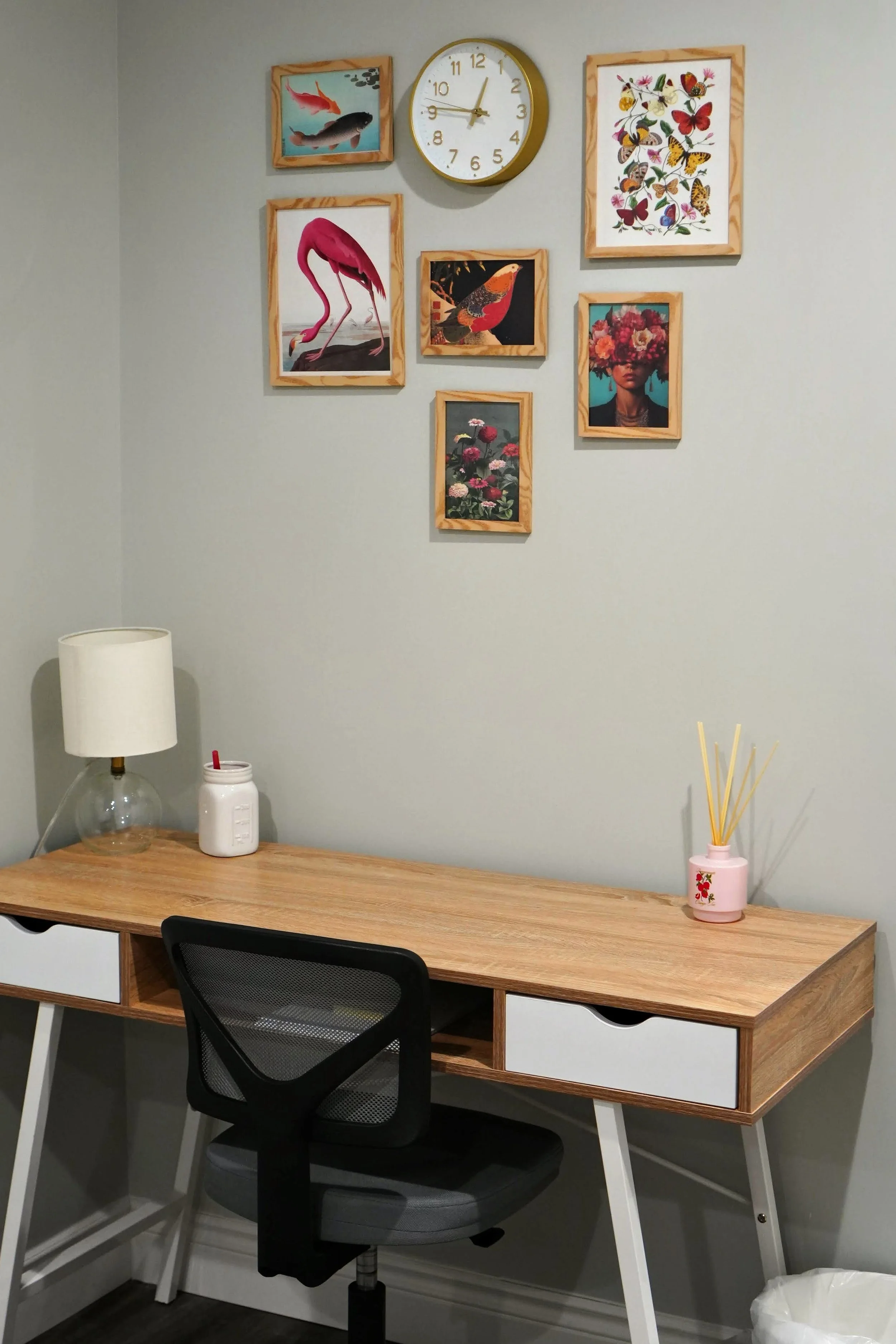
The physical layout of an art therapy workspace profoundly influences clinical outcomes. Traditional clinical offices with harsh fluorescent overheads and formal armchairs can feel intimidating. Dedicated studios swap clinical coldness for natural lighting, washable surfaces, and sensory-friendly furnishings.
A trauma-informed space prioritizes client autonomy. Clients choose where to sit, whether to stand at an easel, and how to engage with materials. Seating clinicians side-by-side with clients at a creative work table reduces the perceived power dynamic of traditional therapy, creating an emotionally safe haven.
Essential Tools and Creative Modalities
Professional art therapy studios maintain a diverse inventory of tactile mediums, each chosen for its specific psychological and kinesthetic properties:
- Fluid Mediums (Watercolor, Gouache, Fluid Inks): Encourage emotional release, spontaneous expression, and letting go of rigid perfectionism.
- Resistant & Structured Mediums (Colored Pencils, Markers, Oil Pastels): Offer high physical control, supporting clients who need emotional containment and structure.
- Three-Dimensional Materials (Sculpting Clay, Wire, Found Objects): Facilitate physical manipulation and grounding, helping trauma survivors externalize somatic tension.
- Deconstructive Media (Collage, Magazines, Torn Paper): Allow clients to assemble fragmented experiences into cohesive narratives without requiring drawing skills.
- Art Journaling & Zines: Offer private, ongoing containers for daily reflection, mindfulness, and slow drawing routines.
Establishing a Low-Pressure and Consent-Based Atmosphere
Therapeutic studios reject the idea that art must be "good" or aesthetically pleasing. Clinicians maintain a strictly non-judgmental stance, never evaluating or grading client work. Instead, therapists ask open-ended questions that invite client-artists to interpret their own symbols, lines, and color palettes.
This consent-based framework encourages neurodivergent clients (such as autistic individuals or those with ADHD) to unmask fully. Stimming, movement, non-linear expression, and silence are welcomed as valid forms of communication.
Who Benefits from Studio-Based Expressive Therapies?
Expressive studio therapies serve a broad spectrum of clinical and community populations. Because art operates as an adaptable non-verbal language, it is effective across all developmental stages and cognitive profiles.

Navigating Complex Trauma, Burnout, and Life Transitions
For trauma survivors and individuals navigating intense life disruptions, studio interventions provide safe avenues for nervous system stabilization. Specialized practices provide tailored creative healing modalities designed for LGBTQIA+ individuals, neurodivergent populations, and healthcare workers recovering from systemic burnout.
Engaging with art materials calms hyperarousal and allows individuals to reprocess difficult memories without retraumatization. Rather than describing an overwhelming memory verbally, a client can map the feeling using texture and color, gradually regaining feelings of safety, embodiment, and personal agency.
Specialized Community and Group Programs
Community-centered studios actively bring therapeutic artmaking beyond private clinical settings into broader public spheres. Collaborative group programming includes:
- Veteran and First Responder Groups: Group cohorts focused on moral injury, stress mitigation, and camaraderie through mixed-media projects.
- Older Adult & Memory Care Wellness: Adaptive painting and clay workshops that support cognitive engagement, fine motor maintenance, and social connection for seniors.
- Kinship Family & Youth Support: Programs designed for foster families, incarcerated youth, and transitional housing residents to explore belonging and mutual support.
- Healer & Clinician Rejuvenation: Creative peer support circles that offer therapists and caregivers spaces to process secondary traumatic stress.
Practical Considerations: Costs, Credentials, and Selecting a Studio
Finding the right creative mental health practice involves evaluating clinical credentials, fee structures, and physical environments.
What to Expect During Your First Studio Session
Your initial intake session focuses on building rapport and establishing therapeutic safety. You can expect your clinician to:
- Discuss Goals and Boundaries: Clarify what brought you to therapy, review your medical and psychological history, and set collaborative goals.
- Review Sensory Preferences: Discuss your comfort levels with specific textures, sounds, and lighting.
- Explore Studio Materials: Introduce available art tools without pressuring you to produce finished artwork immediately.
- Establish Pace and Consent: Decide together whether your sessions will integrate pure artmaking, talk therapy, or a flexible combination of both.
Navigating Pricing, Insurance, and Affordability Options
Session fees for studio-based therapy vary based on location, provider licensing, and session length:
- Private-Pay Session Rates: Individual intake sessions generally range from $200 to $250, with standard follow-up sessions typically running between $175 and $210 per hour.
- Medical Insurance Billing: Many art therapists hold dual credentials as Licensed Professional Counselors (LPC) or Clinical Mental Health Counselors, allowing sessions to be billed directly to commercial health insurance plans.
- Health Savings Accounts (HSA / FSA): Out-of-pocket art therapy expenses can often be paid or reimbursed using tax-advantaged health savings accounts.
- Sliding Scales & Subsidized Care: Non-profit and community studios frequently offer donor-supported scholarship funds. In many community programs, donor funding covers the operational cost of $700 per participant for full 10-week therapy cohorts, ensuring services remain accessible regardless of financial circumstances.
Key Factors When Choosing Art Therapy Studios for Your Healing Journey
When searching for the ideal practice, consider the following checklist:
- Verified Credentials: Ensure your provider holds appropriate state licenses and creative arts therapy credentials (such as an ATR or ATR-BC).
- Physical Environment & Layout: Look for quiet, dedicated spaces with ample light, good ventilation, and accessible facilities.
- Clinical Alignment: Confirm that the clinician specializes in your specific areas of need, whether that involves complex trauma, neurodivergence, or child development.
- Flexibility for Clinicians: If you are a mental health professional seeking to expand into creative modalities, finding a fully equipped, rentable therapy space ensures you have access to quiet, professional rooms and shared-office amenities without prohibitive lease overhead.
Frequently Asked Questions About Art Therapy Studios
Do I need artistic skill or prior experience to attend an art therapy studio?
No artistic skill, talent, or background is required. Studio sessions prioritize the expressive process rather than creating an aesthetic product. Your therapist guides you through intuitive mark-making, collage, and clay manipulation designed purely for emotional expression and self-reflection.
How much do art therapy sessions typically cost and does insurance cover them?
Private-pay individual sessions generally cost between $175 and $240 per hour, depending on clinician experience and location. Many art therapists accept major health insurance plans if they are licensed mental health counselors in their state, while others provide superbills for out-of-network insurance reimbursement. Subsidized sliding scales and donor-backed community groups are also widely available.
What credentials should I look for in a qualified art therapist?
Look for practitioners who hold a Master’s Degree in Art Therapy or Clinical Mental Health Counseling from an accredited institution. Key professional credentials include the Registered Art Therapist (ATR) and Board Certified Art Therapist (ATR-BC) designations issued by the Art Therapy Credentials Board (ATCB), alongside state-specific mental health licenses such as LPC, LPCC, LMFT, or Licensed Creative Arts Therapist (LCAT).
Conclusion
Art therapy studios provide transformative, evidence-based spaces where individuals move beyond the limits of verbal dialogue to achieve profound emotional healing. By uniting professional mental health counseling with the sensory power of creative materials, these specialized environments empower client-artists to regulate their nervous systems, safely process trauma, and cultivate lasting resilience.
Whether you are seeking personal healing through creative expression or you are a clinician looking to grow your private practice within a supportive therapy practice environment, studio-based expressive therapies offer a vibrant, compassionate path toward whole-person wellness.