
Finding Safe and Confidential Counselling Rooms to Rent Near You
How to Find Top-Rated Counselling Rooms to Rent Near Me
To find counselling rooms to rent near you, start with specialized therapy-space directories, local therapist peer networks, and established medical or wellness hubs. Shortlist rooms that offer acoustic privacy, discreet client access, professional furnishings, flexible booking options, and clear insurance or credentialing requirements. A dedicated rentable therapy space can help you avoid generic corporate offices and choose a setting designed for confidential clinical work.
Finding the right clinical environment requires a targeted approach. While a standard commercial office search might turn up hundreds of executive boardrooms, mental health practitioners require specialized consulting suites designed with client discretion in mind.
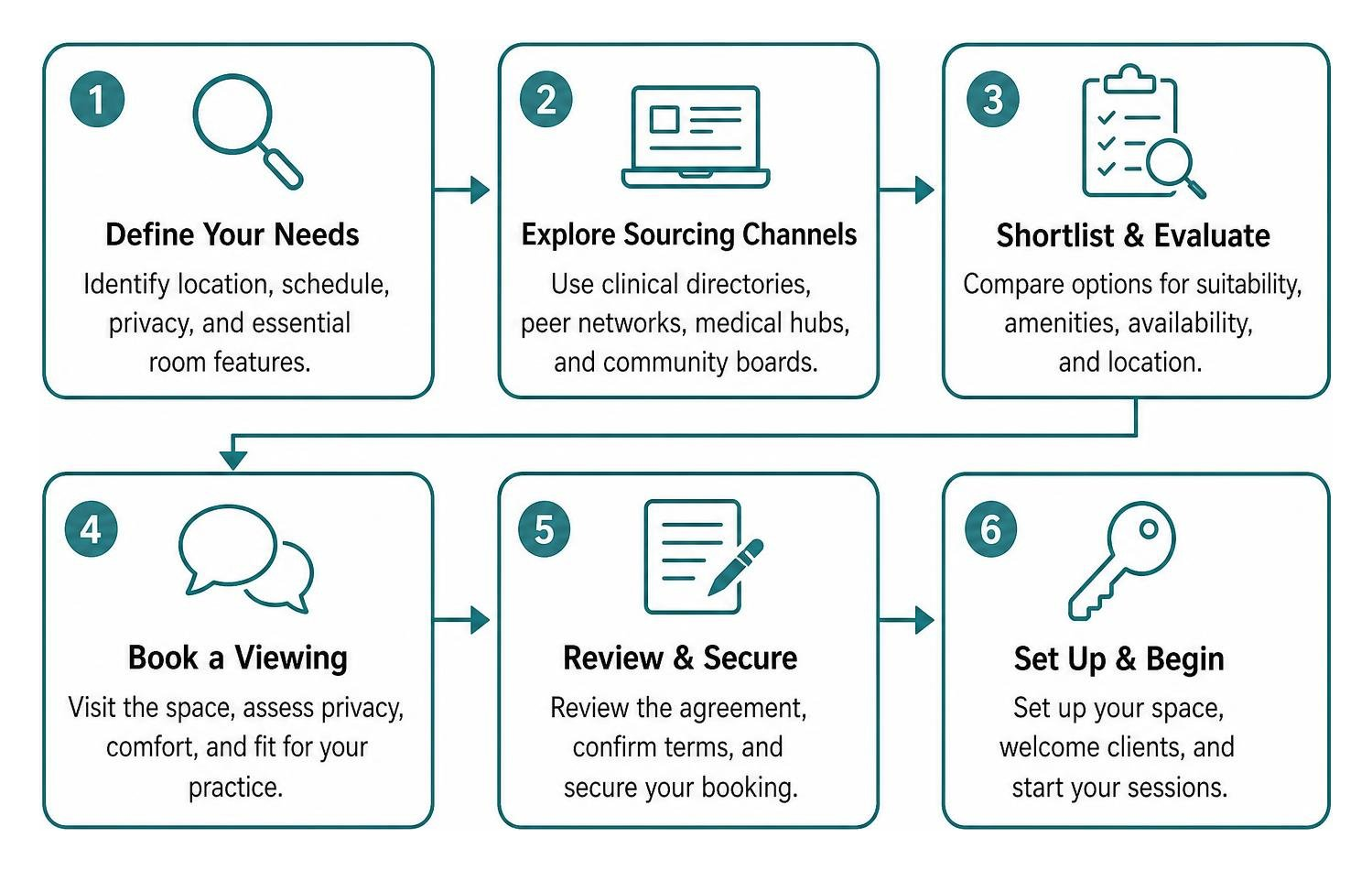
Step-by-Step Search Strategy for Counselling Rooms to Rent Near Me
When building your private caseload, finding convenient, high-quality consulting rooms involves several reliable channels:
- Targeted Clinical Directories: Specialized mental health property listings connect clinicians with ready-to-use offices. These directories screen listings for clinical suitability, ensuring acoustic isolation and appropriate professional decor.
- Professional Peer Networks and Facebook Groups: Local therapist networks, supervision groups, and association forums frequently share subletting opportunities. Fellow clinicians who have excess office capacity often rent out unused days.
- Medical and Wellness Hubs: Exploring established wellness centres and multidisciplinary buildings can reveal shared practice suites where mental health professionals work alongside complementary care providers.
- Community Boards and Local Classifieds: Local neighbourhood forums can occasionally uncover quiet, independent consulting spaces in historic properties or quiet commercial districts.
Comparing Sourcing Channels for Clinical Spaces
Not every rental avenue delivers the same balance of security, flexibility, and client comfort. Here is how the most common sourcing options compare:
- Dedicated Therapy Suites: Purpose-built clinical environments provide turn-key furnishings, specialized soundproofing, comfortable client waiting areas, and digital booking platforms. This option minimizes administrative overhead and offers maximum professional credibility.
- Traditional Commercial Leases: Long-term commercial leases offer complete autonomy over design and branding. However, they come with substantial financial commitments, multi-year contracts, upfront furnishing costs, and ongoing facility management obligations.
- Multidisciplinary Health Clinics: Sharing space within an allied medical clinic provides ready-made administrative infrastructure and excellent inter-professional networking, though room availability may be tied to standard medical office hours.
- Community Meeting Rooms and Serviced Corporate Offices: While easily accessible and occasionally budget-friendly, generic corporate meeting rooms often lack adequate acoustic privacy, warm therapeutic aesthetics, and discrete client entryways.
Essential Factors for Safe, Soundproofed, and Confidential Spaces
In clinical mental health work, physical space directly impacts the therapeutic alliance. A private practice room must serve as a safe container where clients feel comfortable exploring sensitive experiences without fear of being overheard or interrupted.
Sound Isolation and Acoustic Privacy
Acoustic privacy is the cornerstone of clinical confidentiality. A client who worries that their voice carries into a hallway cannot engage openly in therapy.
- Acoustic Insulation and Solid-Core Doors: Quality clinical suites feature heavy, solid-core doors with perimeter acoustic seals and insulated interior walls designed to prevent sound transmission between rooms.
- Sound Masking Systems: White noise and pink noise machines placed strategically outside office doorways create a subtle acoustic barrier, ensuring that private conversations remain strictly confidential.
- Layout Separation: Well-designed practices place consultation rooms away from high-traffic waiting areas, communal kitchens, and public entryways.
- Furnishing Acoustics: Soft furnishings, area rugs, heavy curtains, and canvas artwork help absorb sound within the room, eliminating distracting echoes and creating a warm, grounded atmosphere.
Security, Access Control, and Lone Working Safety
Clinicians frequently see clients during early mornings, late evenings, or weekends. Ensuring physical safety for both practitioner and client is an operational necessity.
- Keyless Access and Digital Entry: Electronic fobs, keypad entry codes, and smart locks allow seamless, secure entry without the logistical headache of physical key exchanges.
- Discreet Client Entrances: Entrances and waiting areas should offer visual discretion, allowing clients to arrive and depart comfortably without feeling on display.
- Lone Working Safety Protocols: A professional facility should feature well-lit exterior paths, secure building perimeters, clear emergency exit pathways, and visible security guidelines for clinicians practicing outside traditional business hours.
Comparing Rental Models: Hourly, Daily, and Dedicated Leases
Selecting the right rental arrangement depends on your current client volume, budget, and long-term practice goals. The table below outlines how different rental structures compare across essential clinical and financial metrics:
| Rental Model | Ideal Practice Stage | Scheduling Flexibility | Financial Commitment | Overhead & Setup Costs |
|---|---|---|---|---|
| Hourly / Ad Hoc | Starting out, hybrid telehealth caseloads, solo private practitioners | High; book only the hours you need | Pay-as-you-go; minimal upfront costs | Zero setup; fully furnished turn-key space |
| Time Block / Shift (AM/PM) | Steady part-time practice (8–15 clients weekly) | Fixed half-day or full-day recurring blocks | Predictable weekly or monthly rental fee | Low; shared amenities included in base rate |
| Full-Time Dedicated Lease | Established full-time practice (20+ clients weekly) | Complete control over 24/7 room schedule | High; fixed multi-year lease obligations | High; requires custom furnishings, utilities, and maintenance |
Evaluating Ad Hoc and Block Booking Options
Flexible booking options allow you to tailor your real estate expenses directly to your revenue. Hourly rentals allow practitioners operating on 50-minute clinical hours to reserve rooms precisely when their clients need them, avoiding the expense of paying for vacant office hours.
For practitioners with established client days, half-day (morning or afternoon) and full-day blocks provide a reliable, recurring schedule at discounted per-hour rates. This tiered flexibility protects your cash flow as your caseload expands.
Shared Multidisciplinary Practices vs. Standalone Office Suites
Renting an individual room within a shared professional facility offers several distinct advantages over leasing a standalone private office:
- Colleague Collaboration: Working alongside other practitioners reduces the isolation of private practice and fosters a supportive professional community.
- Cross-Referral Networks: Multidisciplinary environments naturally generate internal referrals between counsellors, psychologists, social workers, and allied specialists.
- All-Inclusive Amenities: Shared spaces spread the cost of high-speed business Wi-Fi, waiting room maintenance, tea and coffee hospitality stations, and utilities across all members.
- Professional Community Integration: Connecting with members at Therasuites Livonia gives clinicians the opportunity to collaborate, share clinical resources, and grow their private practice within a dedicated mental health setting.
Rental Rates, Hidden Costs, and Lease Agreement Checklist
Understanding the complete financial picture helps you avoid surprises that could impact your practice's profitability.
Key Clauses to Inspect Before Signing a Rental Agreement
Before signing an agreement or booking your first block of hours, carefully review the contract terms:
- Included Services vs. Extra Surcharges: Verify whether cleaning services, high-speed Wi-Fi, heating/cooling, and guest tea/coffee stations are included in the base rate or billed separately.
- Cancellation and Rescheduling Rules: Check the advance notice required to cancel or reschedule room bookings without financial penalty.
- Security Deposits and Bond Terms: Review whether an upfront security deposit is required for key cards or physical access fobs, and confirm the terms for its return.
- Mail Handling and Commercial Address Use: Determine if the rental agreement permits you to register your business address at the property and receive professional practice mail.
Professional Credentials and Insurance Requirements for Counselling Rooms to Rent Near Me
Reputable clinical spaces require all practitioners to provide standard verification before practicing on site. This safeguards the professional integrity of the building and ensures legal compliance. You will typically be asked to present:
- Proof of active professional licensure or credentialing with an accredited mental health association.
- A valid Certificate of Insurance showing professional liability and general commercial liability coverage (standard facilities commonly look for minimum limits of $1,000,000).
- Government-issued photo identification.
Frequently Asked Questions About Renting Counselling Rooms
How much does it typically cost to rent a counselling room?
Rental rates vary based on location, building amenities, and booking commitment:
- Hourly Ad Hoc Bookings: Casual room hire generally ranges from $20 to $50 per hour in suburban areas, while central commercial locations or high-end multi-use studios can range from $30 to $175+ per hour.
- Half-Day & Daily Blocks: Half-day blocks (typically 4 to 5 hours) often cost between $80 and $135, while full-day rentals range from $100 to $250 per day.
- Dedicated Monthly Leases: Full-time dedicated consulting offices generally range from $450 to upwards of $2,000+ per month depending on room square footage, exclusivity, and geographic demand.
For additional information on our membership tiers and flexible booking terms, explore our comprehensive FAQ page.
What insurance is required to rent a therapy space?
Practitioners must carry their own Professional Indemnity (Malpractice) and Commercial General Liability insurance. While building owners maintain property insurance for communal areas, individual practitioner policies protect against client injury inside your consulting room and cover professional clinical liability during sessions.
What amenities should be included in a professional rental room?
A dedicated clinical room rental should provide:
- Comfortable, ergonomic seating for individual, couples, or family sessions.
- A quiet, separate client waiting area.
- High-speed, encrypted Wi-Fi for teletherapy and administrative work.
- Acoustic soundproofing or ambient white noise machines.
- Client amenities such as water stations, tissues, and clean, accessible restrooms.
Next Steps: Find a Counselling Room That Fits Your Practice
Finding the ideal consulting space is an important step in establishing a sustainable, client-centred private practice. By prioritizing acoustic privacy, flexible rental models, physical security, and professional community support, you create a setting where both you and your clients can thrive.
At TheraSuites, we provide turn-key, beautifully furnished office spaces designed specifically for mental health professionals. With customizable membership plans, hourly booking flexibility, mail forwarding services, and a community of dedicated clinicians, our spaces help you manage overhead and focus on providing exceptional care.
Visit our Home page to discover how our modern suites support your clinical workflow, or Join Now to secure your ideal counselling space today.