
Find Affordable, Flexible Office Space for Therapists

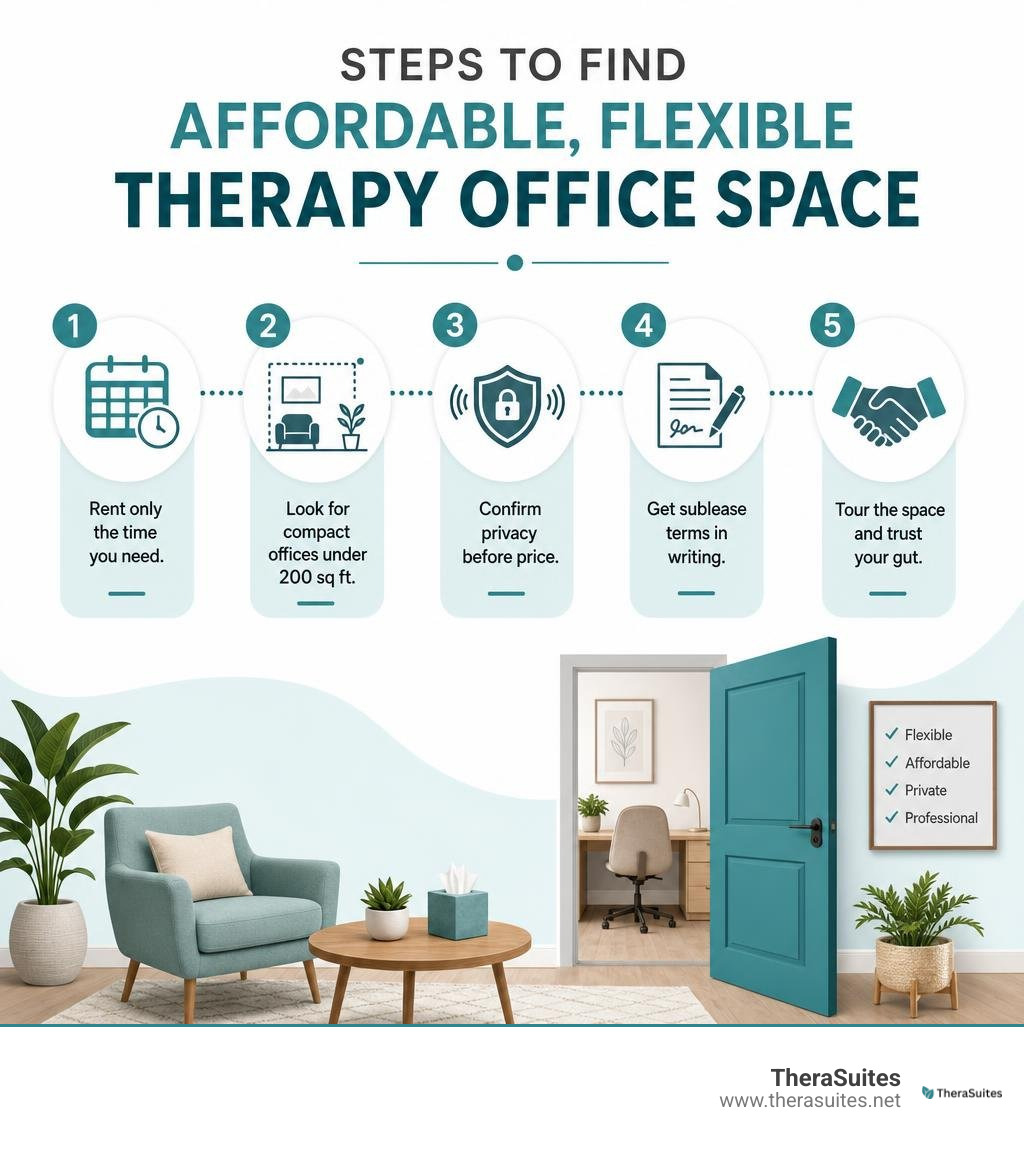
To find office space for therapists without taking on a costly full-time lease, start with flexible options: part-time subleases from other clinicians, shared therapy suites, and small furnished offices. Search niche therapy-space listings and professional peer networks, then contact local medical and wellness buildings directly if online inventory is thin.
Prioritize spaces that fit both your budget and your practice needs:
- Rent only the time you need, such as one or two evenings each week.
- Look for compact offices under 200 square feet, often with a shared waiting area.
- Confirm privacy before price, including sound control, secure access, and a confidential setting for clients.
- Get sublease terms in writing, including schedule, utilities, notice period, and client-area access.
Traditional commercial listings often focus on large, multi-room suites. That leaves many solo clinicians paying for space they will not use. A flexible office, by contrast, can help you build an in-person or hybrid practice while keeping overhead predictable.
This guide explains where to look, how to uncover low-visibility opportunities, and what to negotiate before you commit.
Common Real Estate Obstacles for Solo Practitioners
When launching or maintaining an independent practice, clinicians quickly realize that standard commercial real estate listings do not cater to their unique workflow. The standard commercial real estate market is designed for corporations, legal firms, or large medical groups that want multi-year commitments for thousands of square feet.
As a solo practitioner, your reality is often very different. You might only need a room for 10 to 15 client contact hours per week, especially if you maintain a hybrid practice with telehealth sessions. Signing a traditional three-to-five-year commercial lease for an entire suite introduces high overhead, personal financial liability, and the headache of furnishing empty rooms, setting up internet, and organizing cleaning services.
Furthermore, therapy requires strict acoustic privacy and ethical confidentiality. A standard open-concept coworking space or a poorly insulated commercial office simply cannot provide the sound isolation required for sensitive mental health conversations. Sound bleeds through hollow doors and thin drywall, exposing client disclosures and compromising professional standards.
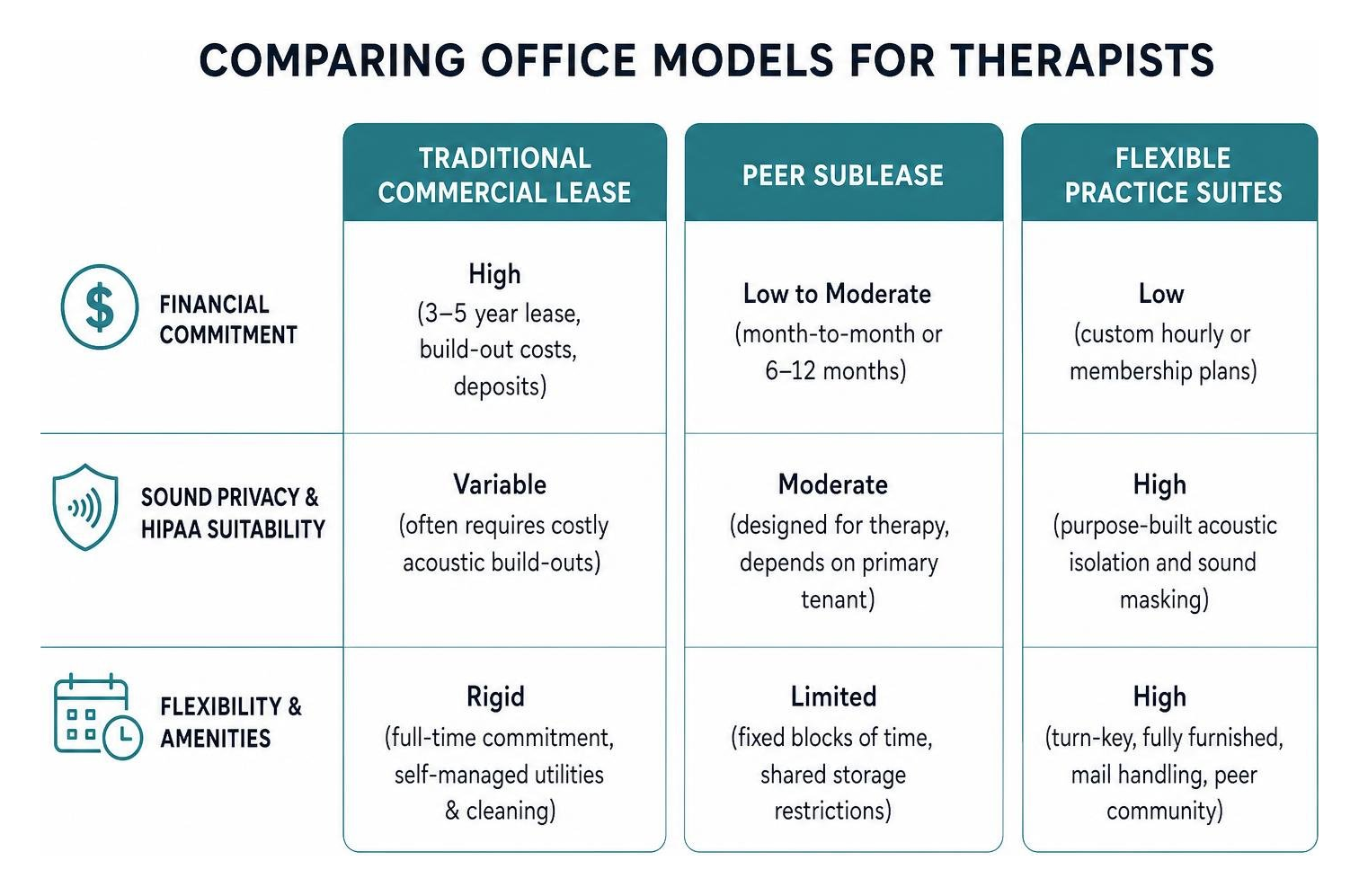
The table below breaks down the reality of standard real estate pathways versus purpose-built clinical options:
| Space Model | Financial Commitment | Sound Privacy & HIPAA Suitability | Flexibility & Amenities |
|---|---|---|---|
| Traditional Commercial Lease | High (3–5 year lease, build-out costs, deposits) | Variable (often requires costly acoustic build-outs) | Rigid (full-time commitment, self-managed utilities & cleaning) |
| Peer Sublease | Low to Moderate (month-to-month or 6–12 months) | Moderate (designed for therapy, depends on primary tenant) | Limited (fixed blocks of time, shared storage restrictions) |
| Flexible Practice Suites | Low (custom hourly or membership plans) | High (purpose-built acoustic isolation and sound masking) | High (turn-key, fully furnished, mail handling, peer community) |
Innovative Sourcing Channels for Office Space for Therapists
Finding the ideal room requires looking beyond standard commercial property portals. Because solo clinicians frequently search for compact units, learning how to leverage specialized channels is essential.
Finding Small Office Space for Therapists Under 200 Sq Ft
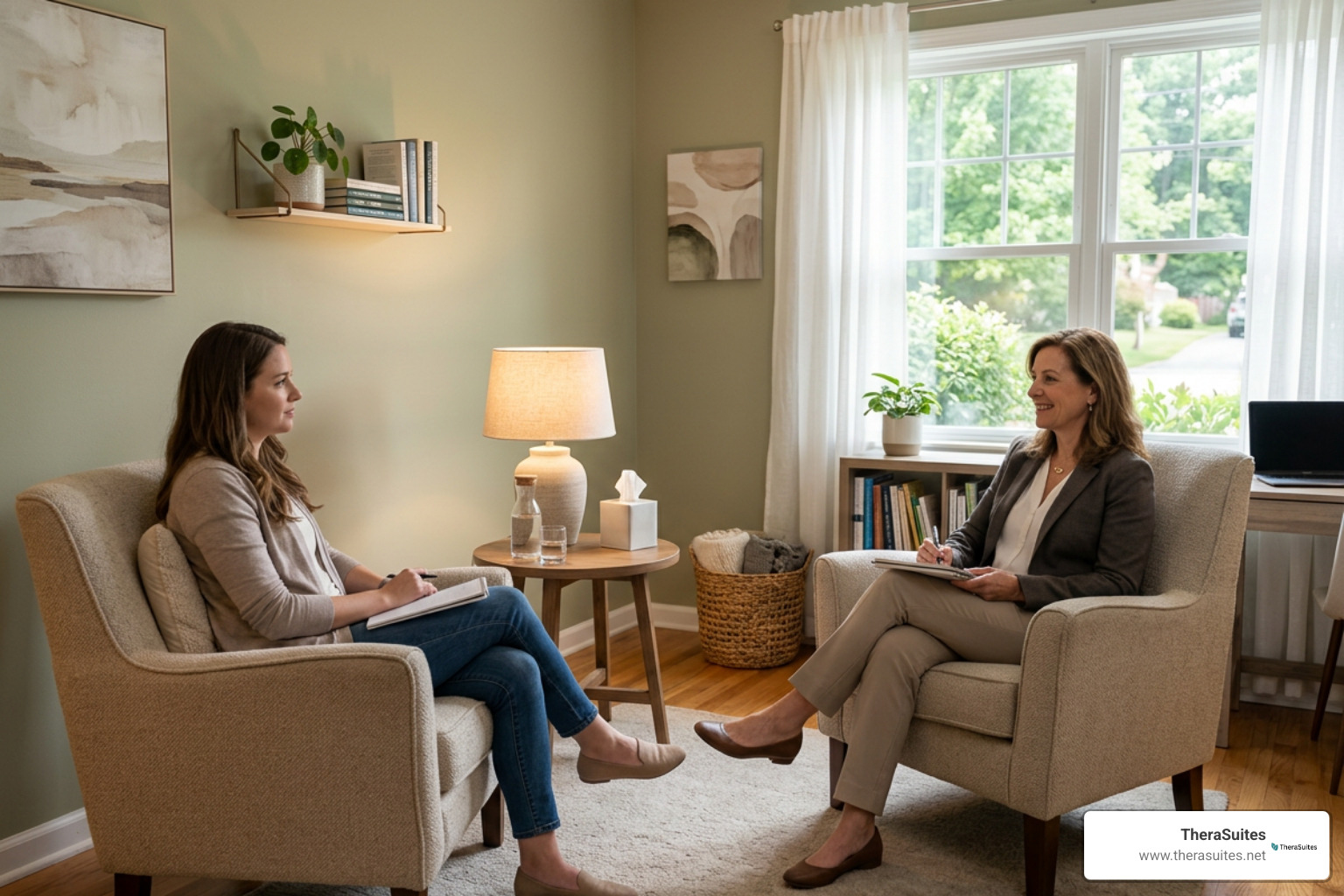
Most solo providers require less than 200 square feet to run an effective, comfortable private practice. A compact footprint accommodates two armchairs or a sofa, a practitioner desk, and discreet storage for records or supplies.
Unfortunately, commercial landlords rarely list standalone micro-units. The secret lies in identifying shared clinical suites where private consultation rooms connect to a central, professional waiting area. This layout maximizes square footage efficiency while maintaining a peaceful environment for clients before their appointments.
If you are looking for ready-to-use, acoustically isolated suites designed specifically for clinicians, exploring dedicated Rentable Therapy Space allows you to bypass the headaches of commercial build-outs entirely. You gain immediate access to fully furnished, turn-key rooms without paying for unused square footage.
Leveraging Peer Networks and Digital Classifieds
Some of the most budget-friendly opportunities come directly from colleagues who have excess capacity in their existing leases. Clinicians often rent a full-time suite but only use it three days a week, leaving evenings, mornings, or alternating days open for sublease.
To find these peer sublets:
- Check Professional Classified Boards: Regional and state psychological associations, including state branches affiliated with the American Psychological Association, frequently host classified sections on their websites. While some associations charge listing fees, these boards remain targeted hubs for finding rooms within established mental health practices.
- Explore Online Directory Community Forums: Practitioner platforms often host peer-to-peer discussion boards and classified features (such as community message boards categorized under "office space offered"). Engaging with these boards allows you to connect directly with clinicians offering part-time sublets.
- Specialized Clinical Space Portals: Digital listing sites dedicated to mental health and medical room rentals offer searchable databases of furnished offices available by the day or hour.
Offline and Outreach Strategies for Low-Inventory Markets
In areas where digital listings are sparse, relying solely on online portals may yield few results. Finding a suitable space often requires active community networking and direct outreach.
Start by visiting local professional and medical office complexes. Look at directory boards in multi-tenant professional buildings to spot established group practices, psychiatry clinics, or wellness collectives. Contacting practice managers or suite owners directly with a polite inquiry can uncover unadvertised openings. Many clinicians are open to subleasing their space for one or two days a week to offset their overhead, but simply have not invested the time to create an online listing.
Aligning your search with your core Therapy Practice Mission helps clarify the exact environment you need. When reaching out to potential suite-mates, emphasize your shared dedication to client privacy, professionalism, and quiet clinical standards. Building relationships with local providers not only leads to rental leads, but also creates valuable referral networks that strengthen your practice over time.
Essential Considerations When Structuring a Rental Agreement
Once you locate a promising space, structuring a clear, written agreement is critical to avoid misunderstandings and protect your practice operations.
Negotiating Subleases on Office Space for Therapists
When negotiating a part-time arrangement, clarity on usage schedules and shared resources is paramount:
- Time Blocks and Availability: Clearly define your access window. If you rent Tuesday and Thursday evenings, specify the exact start and end times (e.g., 4:00 PM to 9:00 PM) and clarify whether you have weekend flexibility.
- Pricing Structure: Determine whether the rate is an all-inclusive flat monthly fee or billed per hourly block. Ensure utilities, high-speed Wi-Fi, janitorial services, and waiting room maintenance are bundled into the price.
- Administrative Amenities: Inquire about mail handling, building directory placement, and client reception protocols. Having professional mail services allows you to maintain a dedicated business address without compromising your residential privacy.
Protecting Confidentiality and Practice Compliance
A clinical rental agreement involves responsibilities beyond a standard commercial lease. Client confidentiality, regulatory compliance, and physical safety must take priority.
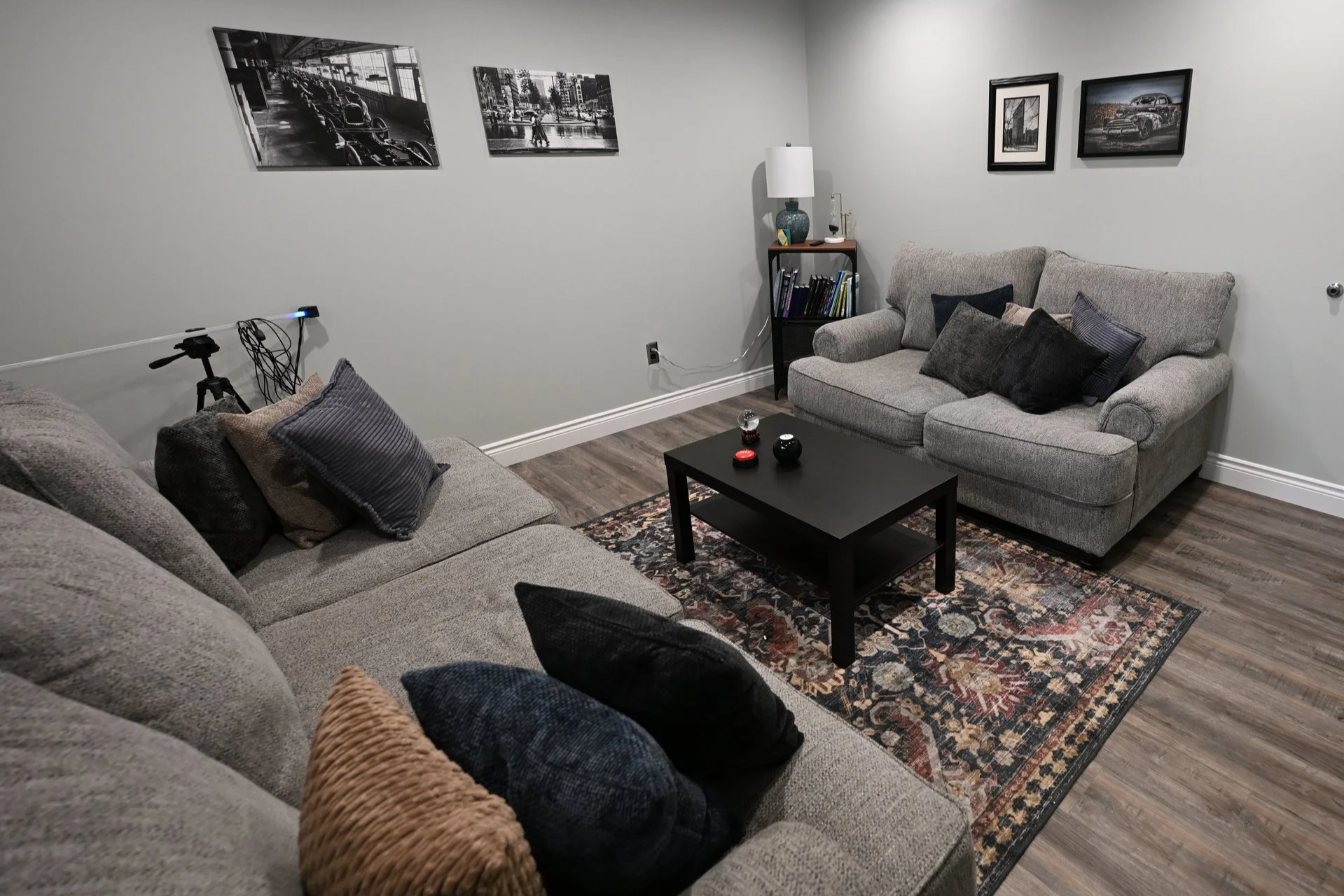
Verify that the suite incorporates proper soundproofing measures, such as solid-core doors, insulated partition walls, and white noise machines outside consultation rooms. Review physical security protocols, keycard or smart lock access, and after-hours building entry procedures to ensure safety for both you and your clients.
Always check the primary lease terms to verify that the master landlord explicitly permits subleasing, and ensure you hold appropriate professional liability insurance naming the required parties if stipulated. For answers to common administrative questions regarding shared professional facilities, review our detailed FAQ.
Frequently Asked Questions About Sourcing Therapy Offices
How can practitioners find micro office space under 200 sq ft?
Focus your search on flexible clinical suites and peer subleases rather than general commercial listings. Connecting with established practices that have shared waiting areas or joining purpose-built mental health co-working spaces gives you access to compact, private rooms under 200 square feet without paying for excess square footage.
What are the top free alternatives to state association classifieds?
Therapists can utilize peer networking groups on professional platforms, clinical directory community forums, and direct outreach to local group practices. Inquiring within local practitioner peer consultation groups or wellness alliances often uncovers shared subletting arrangements without any placement fees.
What should be negotiated in a part-time therapy sublease?
Essential negotiation points include exact scheduled hours, sound masking protocols, client waiting area access, included utilities and internet, storage availability for clinical materials, notice periods for lease termination, and mail handling permissions.
Choose a Flexible Office Space That Supports Your Practice
Securing the right office space does not require signing away years of revenue on an oversized, expensive commercial lease. By targeting part-time sublets, leveraging peer networks, and utilizing purpose-built, flexible suites, you can provide an inviting, confidential environment for your clients while keeping your financial overhead lean.
At TheraSuites, we provide fully furnished, acoustically private clinical offices and practice support services designed specifically for mental health professionals. Explore how our turnkey solutions can help your practice thrive by visiting Home.