
Stop Overpaying on Long Leases with Shared Therapy Rooms for Rent
The True Cost of Practice Overhead: Commercial Leases vs. Shared Suites
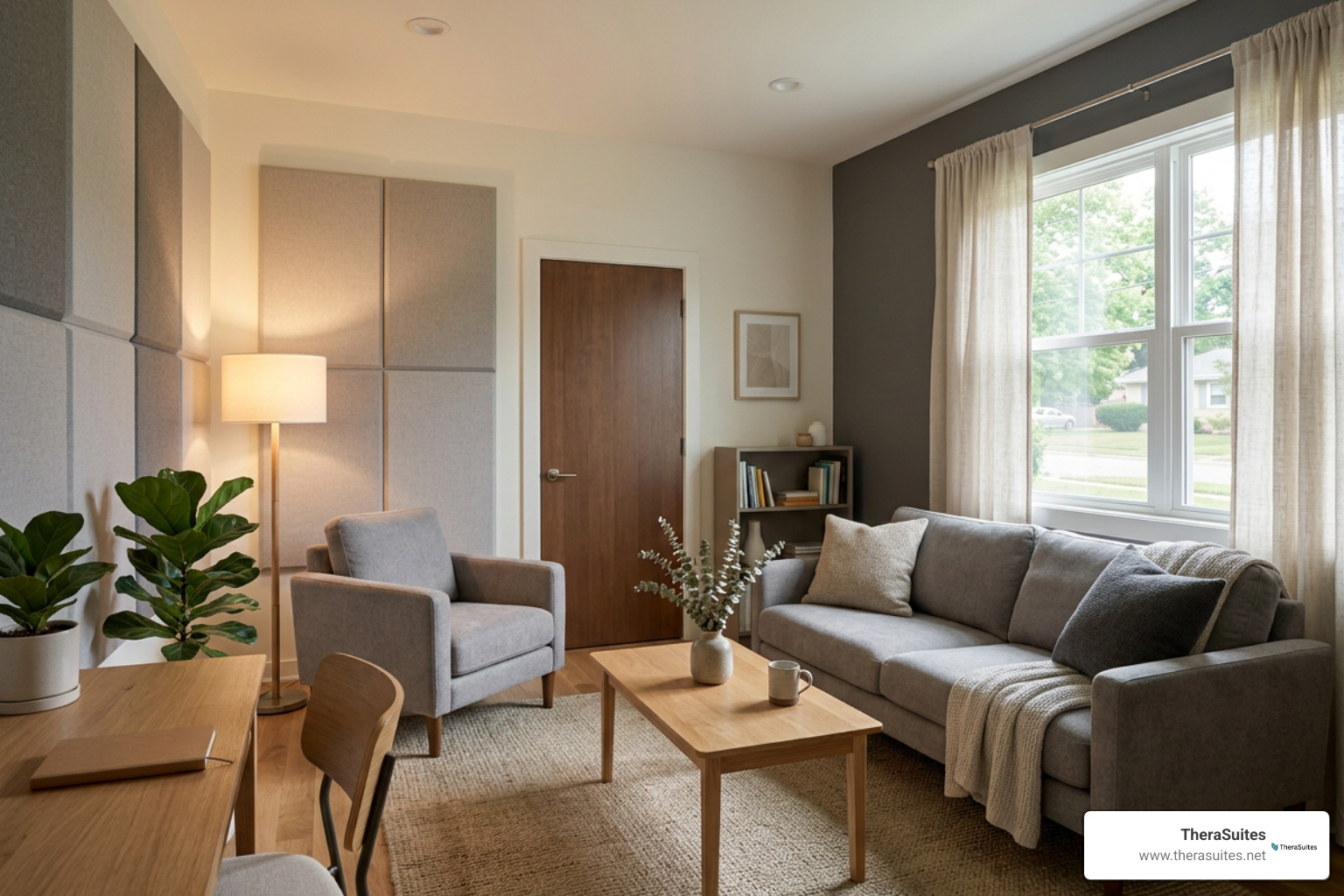
Choosing shared therapy rooms for rent allows mental health practitioners to pay strictly for their billable clinical hours without committing to rigid, multi-year commercial leases. By booking turnkey, fully furnished consulting spaces on hourly, daily, or sessional terms, clinicians eliminate unnecessary overhead and avoid paying for empty square footage on non-clinic days.
Stepping into private practice is an exciting milestone, but navigating traditional commercial real estate can quickly become overwhelming. Landlords typically demand three- to five-year leases, significant security deposits, and personal guarantees. On top of base rent, you are often responsible for fit-out costs, decorating, purchasing commercial-grade furniture, and setting up ongoing utility accounts.
When you calculate the total cost of occupancy, an empty room on days you do not see clients represents pure financial loss. If you see clients three days a week, a full-time lease forces you to pay for four days of unused space every single week. Shared therapy suites eliminate these sunk costs by aligning your overhead directly with your caseload.
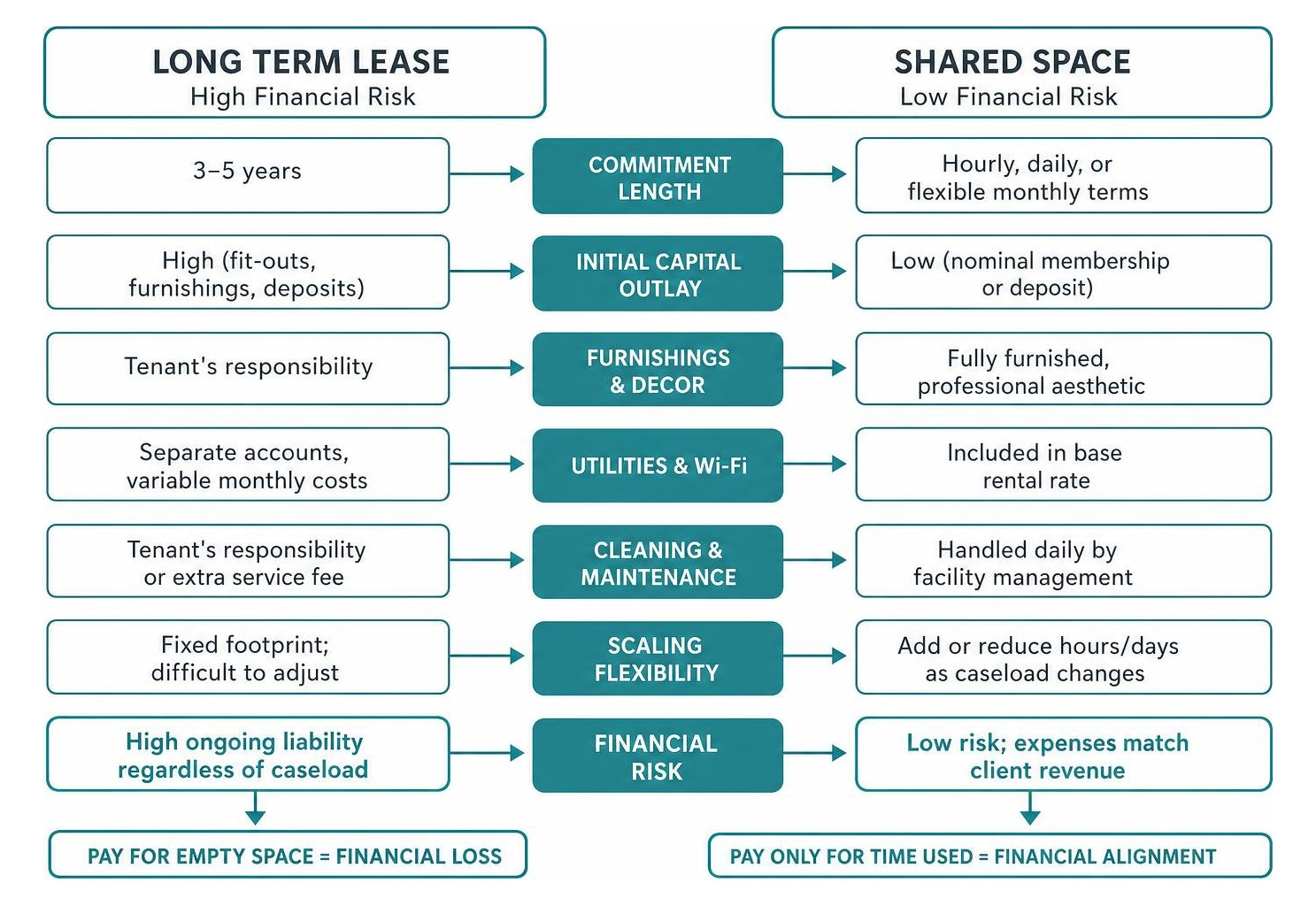
| Expense Category | Traditional Commercial Lease | Flexible Shared Therapy Suite |
|---|---|---|
| Commitment Length | 3–5 years | Hourly, daily, or flexible monthly terms |
| Initial Capital Outlay | High (fit-outs, furnishings, deposits) | Low (nominal membership or deposit) |
| Furnishings & Decor | Tenant's responsibility | Fully furnished, professional aesthetic |
| Utilities & Wi-Fi | Separate accounts, variable monthly costs | Included in base rental rate |
| Cleaning & Maintenance | Tenant's responsibility or extra service fee | Handled daily by facility management |
| Scaling Flexibility | Fixed footprint; difficult to adjust | Add or reduce hours/days as caseload changes |
| Financial Risk | High ongoing liability regardless of caseload | Low risk; expenses match client revenue |
By choosing a shared model, practitioners can protect their cash flow, avoid heavy debt, and invest their resources where they matter most: delivering exceptional client care.
Sessional and Hourly Therapy Rooms for Rent vs. Full-Time Leases
Every clinical practice moves through natural growth phases. When you are establishing your brand or transitioning from an agency, locking yourself into a rigid lease creates unnecessary pressure. Flexible booking structures allow you to select the exact level of commitment that fits your current caseload:
- Hourly & Ad-Hoc Rentals: Ideal for practitioners launching a practice, seeing evening or weekend clients, or maintaining a small caseload alongside another role. Hourly rates generally range from $20 to $50 per hour.
- Half-Day Blocks: Perfect for set morning or afternoon clinic times (for example, 8:00 AM – 1:30 PM or 2:00 PM – 7:30 PM). Half-day rates typically fall between $55 and $135.
- Full-Day Bookings: Designed for steady private practice days without evening rush. Rates usually range from $100 to $250 per day.
- Recurring Weekly Days: Reserving specific days each week gives your clients consistency while keeping your overhead predictable. Weekly rates range from $350 to $780 for multi-day allocations.
Securing rentable therapy space on a sessional schedule ensures you only pay for the time you actually use, giving your business room to breathe.
Multidisciplinary Clinic Hubs and Referral Advantages
Private practice can sometimes feel isolating, particularly if you work in an independent single-occupant office. Practicing within a shared multidisciplinary setting connects you with an active network of psychologists, counsellors, social workers, and allied health professionals.
Working alongside peers provides natural opportunities for informal case consultations, professional camaraderie, and cross-referrals. A child psychologist, for instance, might refer parents to an adult psychotherapist down the hall, while a somatic practitioner can easily collaborate with local talk therapists. This collaborative environment aligns directly with our broader therapy practice mission of supporting independent clinicians through community and shared resources.
Essential Amenities to Look for in Professional Consulting Spaces
A therapy room must be more than just four walls and a desk. Mental health and wellness practices require specialized design considerations to ensure client comfort, safety, and confidentiality.
When evaluating potential clinic spaces, prioritize these operational amenities:
- Acoustic Privacy: High-grade acoustic soundproofing, insulated doors, and continuous white noise machines in hallways to prevent sound transfer.
- Distinct Waiting Areas: A calm, dedicated waiting room that gives clients a dignified, quiet space before their appointments without awkward overlap.
- High-Speed, Secure Wi-Fi: Enterprise-grade internet capable of handling telehealth video calls and electronic health record (EHR) management without dropping connections.
- Access Control: Keyless digital entry or automated door codes that allow seamless access for evening and weekend sessions without requiring on-site concierge staff.
- Practitioner Amenities: A private breakroom or kitchenette equipped with filtered water, tea, coffee, a refrigerator, and a microwave so you can recharge between sessions.
How to Vet Specialized Therapy Rooms for Rent
Different therapeutic modalities require different physical configurations. An office designed strictly for adult psychoanalysis will not suit a practitioner working with expressive arts or pediatric clients.
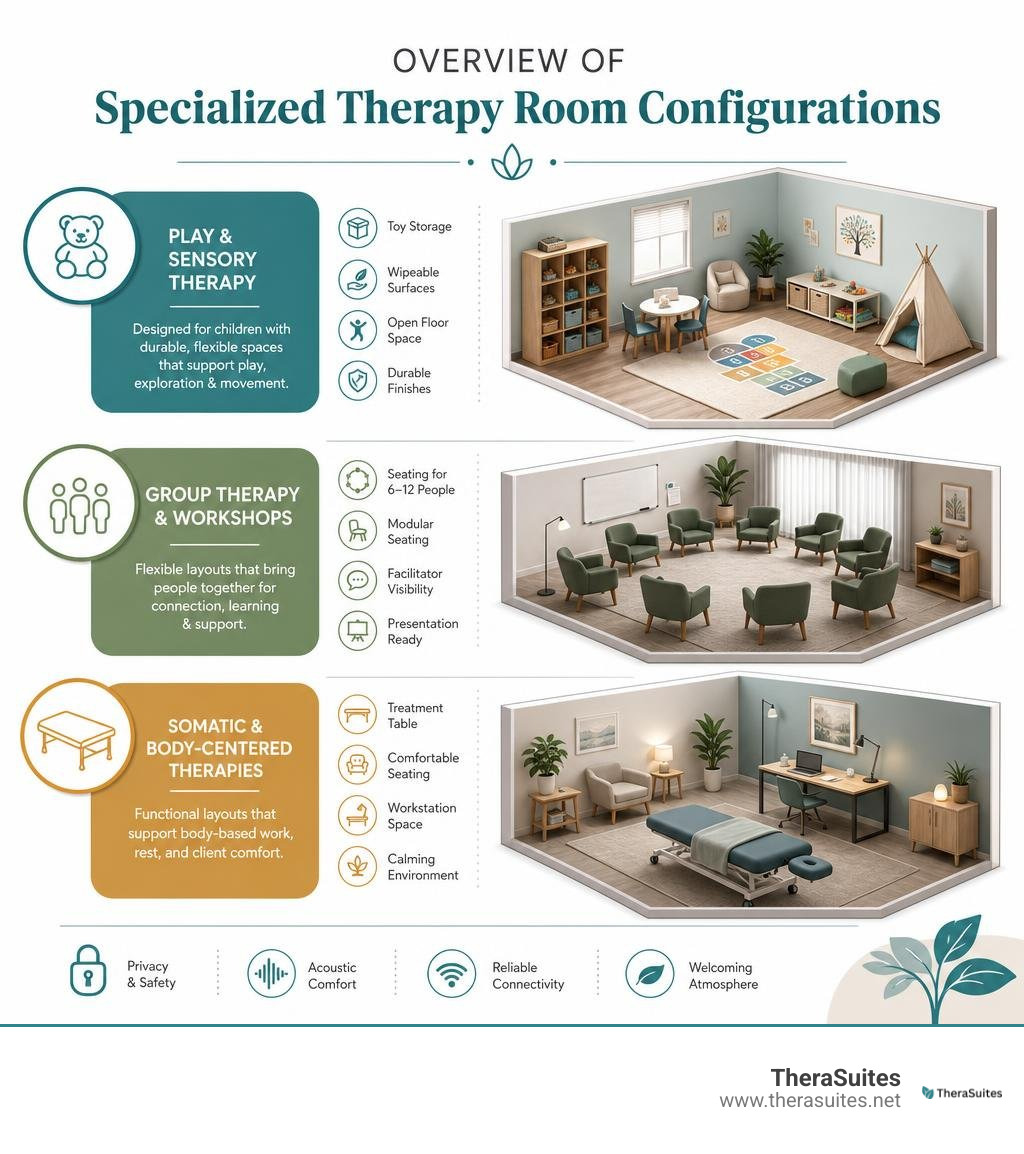
Consider your specific clinical requirements:
- Play and Sensory Therapy: Look for wipeable surfaces, durable flooring, integrated toy storage, and adequate open floor space for movement.
- Group Therapy and Workshops: Ensure the room has modular seating that can comfortably accommodate 6 to 12 participants in a circle without feeling cramped.
- Somatic and Body-Centered Therapies: Verify that the layout can accommodate a treatment table alongside comfortable armchairs and a small workstation.
- Trauma-Informed Design: Seek out spaces with soft, dimmable lighting, neutral color palettes, non-figurative art, and clear sightlines to the doorway to help clients feel grounded and secure.
Accessibility, Compliance, and Professional Credential Requirements
Maintaining a fully compliant practice protects both your clients and your professional license. When touring facilities, assess physical accessibility: verify whether the building features level ground-floor access or reliable elevator service, ADA-compliant restrooms, and accessible client parking nearby.
To maintain high professional standards, reputable shared clinic providers will ask you to verify your credentials before booking space. Be prepared to provide:
- A current, unrestricted mental health or allied health professional license.
- Active professional indemnity and public liability insurance.
- Membership confirmation in a recognized professional association.
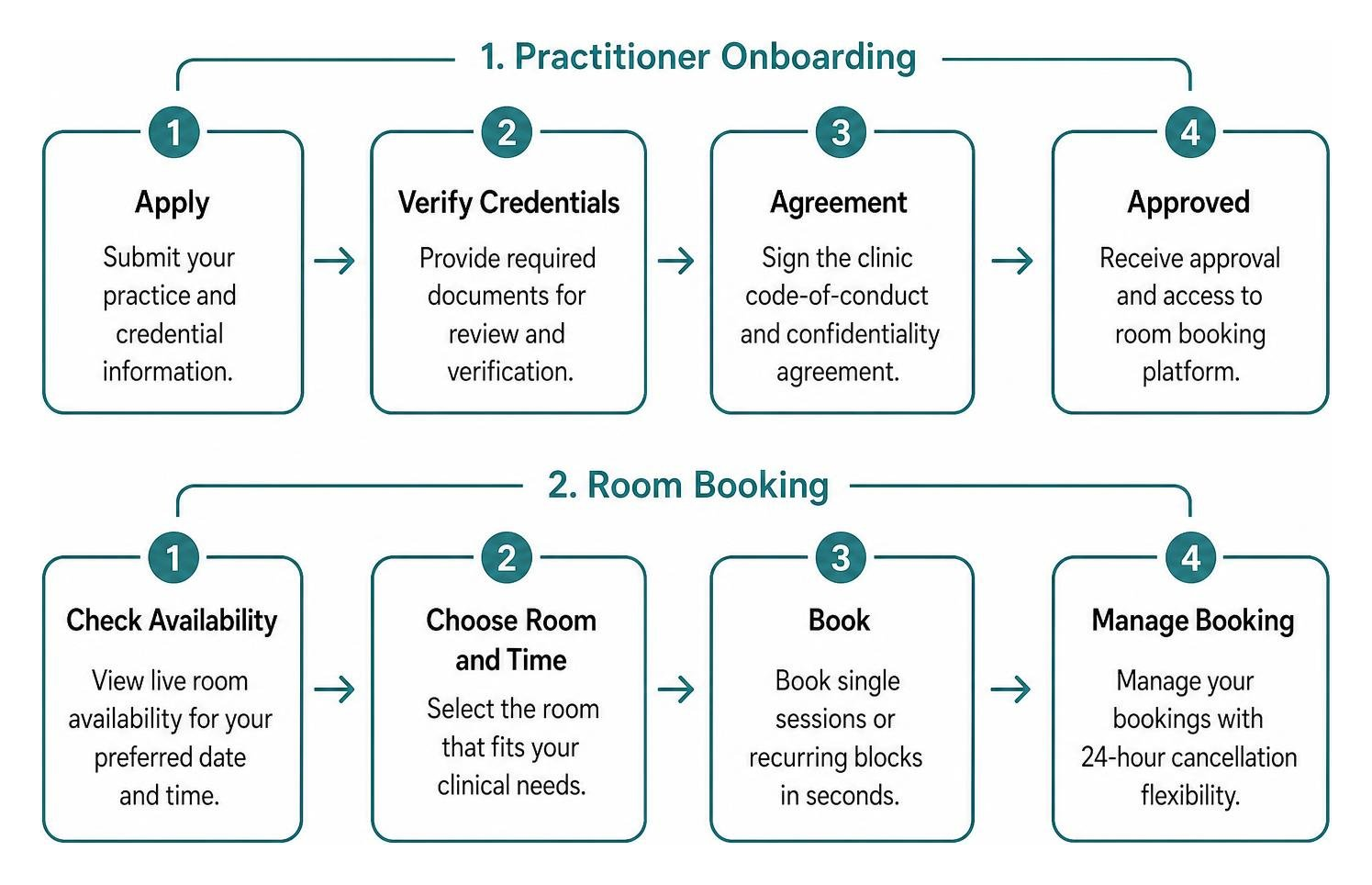
- A signed agreement adhering to clinic code-of-conduct and client confidentiality protocols.
Finding the Right Therapy Rooms for Rent for Your Clinical Practice
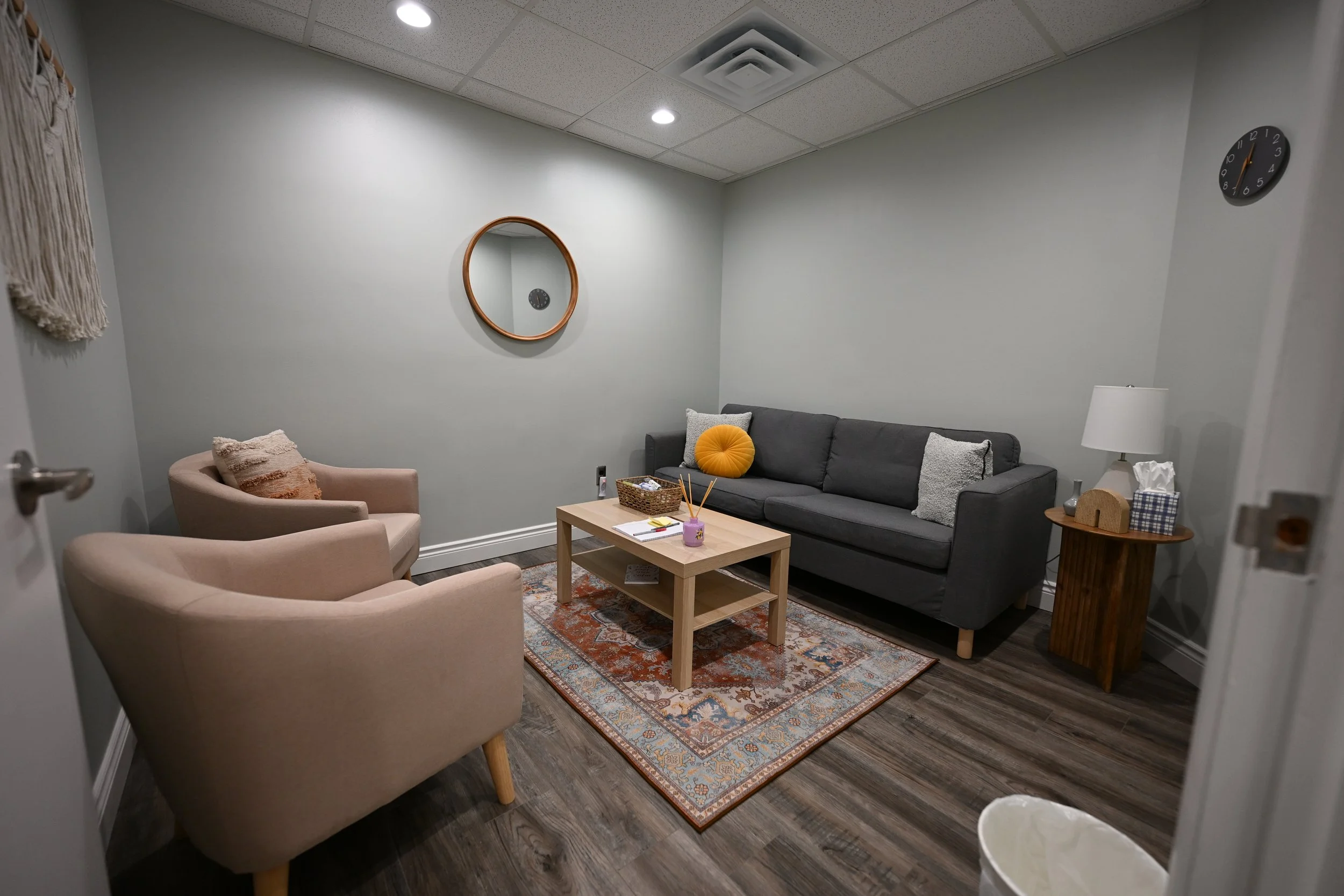
Choosing where to base your in-person practice impacts everything from client retention to your daily commute. Look for locations situated near major transportation corridors, with clear wayfinding and stress-free parking options for clients who may already feel anxious about attending therapy.
Modern booking systems make managing your practice straightforward. Look for facilities that offer online scheduling platforms where you can view live room availability, book recurring or ad-hoc blocks in seconds, and take advantage of fair 24-hour cancellation policies.
Step-by-Step Guide to Touring and Securing Practice Space
Follow this simple checklist when evaluating and securing a new consulting room:
- Schedule an On-Site Tour: Visit during typical operating hours to observe noise levels, hallway traffic, and overall clinic atmosphere.
- Perform an Acoustic Check: Close the consulting room door and have someone speak in a normal conversational tone in the hallway or adjacent room to test sound containment.
- Review the Inclusions: Confirm that cleaning services, utilities, high-speed internet, and client refreshments are bundled into the rental fee with no hidden service charges.
- Submit Your Credentials: Provide your license, proof of insurance, and identification for rapid onboarding.
- Connect with the Community: Meet fellow practitioners such as the members at Therasuites Livonia to begin establishing your local referral network.
Optimizing Hybrid Practice Models with Virtual Office Support
Many contemporary practitioners maintain a hybrid schedule, balancing virtual telehealth sessions with in-person clinical days. A shared suite model complements this approach seamlessly.
Virtual office services allow you to maintain a professional commercial address for your practice registration, website, and Google Business Profile without publishing your home address. Bundled with secure mail handling, a business address keeps your operations compliant and presents a polished, professional image to clients and regulatory boards alike.
Frequently Asked Questions About Renting Therapy Rooms
What is the average cost of renting a therapy room?
Rental rates vary based on location, room size, and booking frequency. Casual hourly bookings typically range from $20 to $50 per hour. Sessional half-day blocks generally cost between $55 and $135, while full-day rates average $100 to $250. Monthly packages that include dedicated days or full-time access range from $350 to $780+ per week. These rates typically include all utilities, Wi-Fi, cleaning, and shared amenities. For detailed plan breakdowns, visit our FAQ page.
Do I need long-term contracts to book professional clinic space?
No. Unlike traditional commercial landlords who demand multi-year commitments, shared therapy spaces offer flexible terms. You can book rooms on an ad-hoc hourly basis, reserve recurring weekly days on a month-to-month agreement, or choose flexible memberships that allow you to adjust your commitment as your client numbers fluctuate.
What credentials and insurance are required before booking?
To ensure client safety and maintain clinical standards, practitioners must provide proof of active licensure or registration with an appropriate professional board, along with a current certificate of professional indemnity and commercial general liability insurance.
Next Steps for Your Practice

Building a thriving private practice does not require taking on massive commercial debt or signing rigid multi-year leases. By choosing flexible, turnkey consulting suites, you can significantly reduce your overhead, protect your personal finances, and practice in a collaborative, beautifully designed clinical setting.
TheraSuites offers premium, fully furnished offices and comprehensive practice support tailored specifically to mental health professionals. Explore our flexible therapy office solutions to find the right setup for your business, or Join Now to reserve your space today.