
Understanding Rental Models for Therapy Spaces for Rent
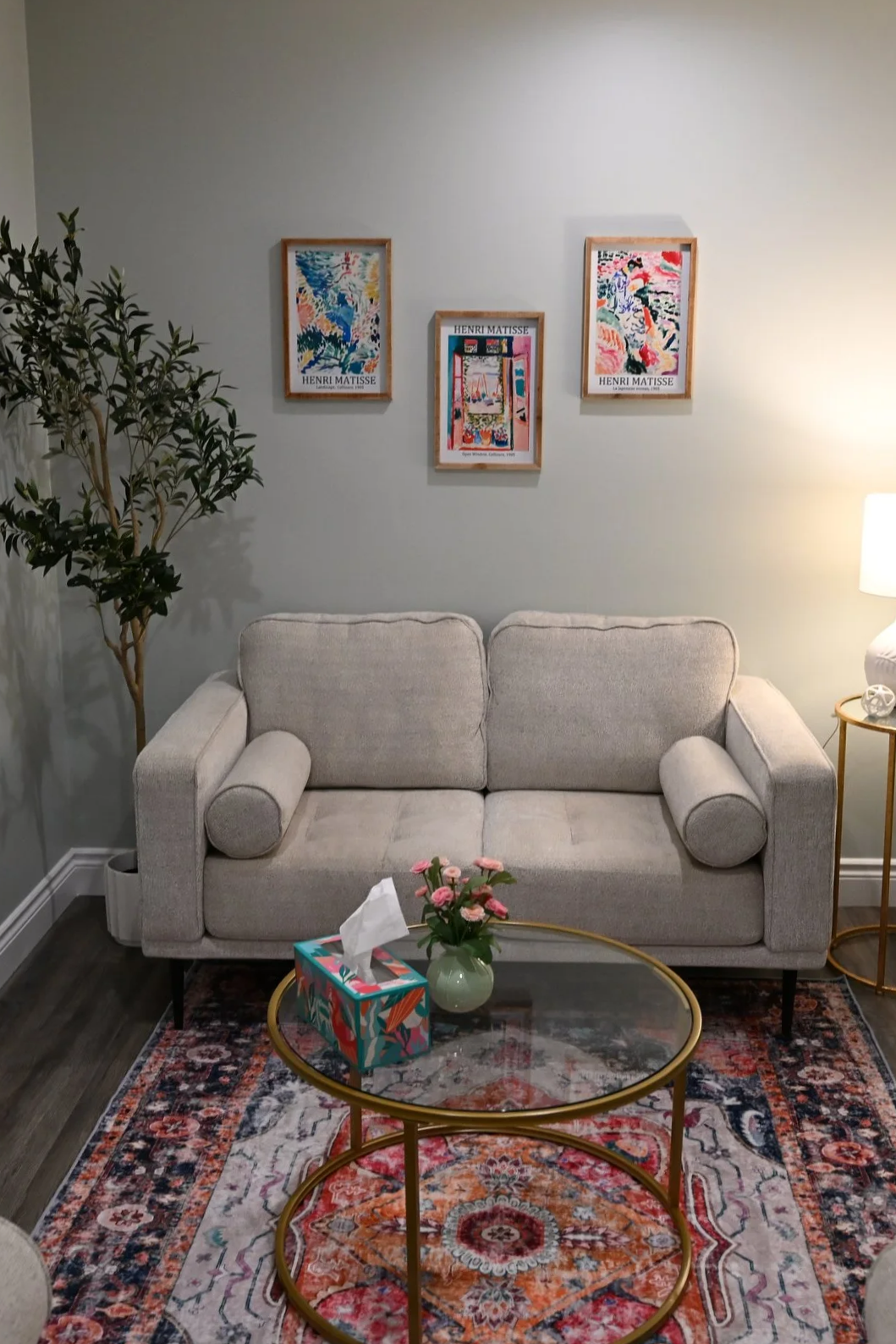
When evaluating therapy spaces for rent, practitioners must primarily assess four core factors: rental model flexibility (hourly bookings, day-rate blocks, or long-term leases), acoustic privacy and soundproofing standards, layout suitability for specific clinical modalities, and transparent, all-inclusive pricing terms. Finding the right clinical environment balances operational overhead, HIPAA-compliant client confidentiality, and daily practice convenience.
The mental health landscape has shifted dramatically. With nearly 1 in 5 U.S. adults—over 50 million individuals—experiencing mental illness each year, according to the National Institute of Mental Health, the demand for accessible care is at an all-time high. The U.S. mental health services market is projected to expand from $71.1 billion in 2024 to $87.4 billion by 2029. In response, the number of practitioners entering private practice has surged by more than 30% since 2020.
Most graduate programs teach clinical excellence, but they rarely prepare clinicians for the operational headaches of commercial real estate. Traditionally, opening an office meant signing a three- to five-year commercial lease, buying expensive furniture, setting up utility accounts, and paying for empty square footage on days you saw clients via telehealth.
Today, flexible office space is rapidly replacing traditional commercial leases, with projections showing flexible rentals will represent 30% of all office inventory by 2030. Clinicians now have access to agile models that match their exact scheduling needs without long-term financial exposure.
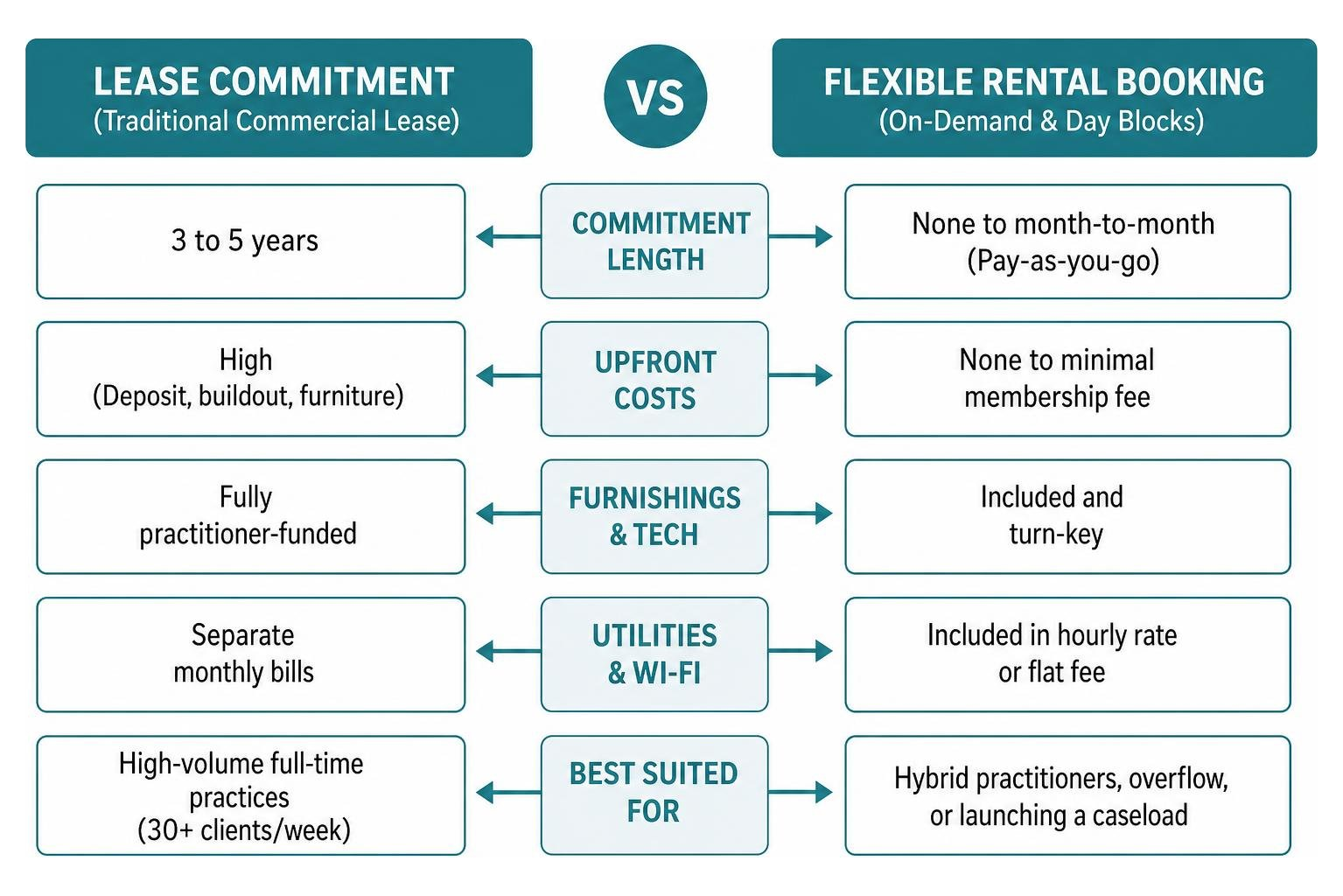
| Feature / Model | Traditional Commercial Lease | Recurring Weekly Day Blocks | On-Demand Hourly Rentals |
|---|---|---|---|
| Commitment Length | 3 to 5 years | Month-to-month or 6 months | None (Pay-as-you-go) |
| Upfront Costs | High (Deposit, buildout, furniture) | Low (1-month security deposit) | None to minimal membership fee |
| Furnishings & Tech | Fully practitioner-funded | Included and fully furnished | Included and turn-key |
| Utilities & Wi-Fi | Separate monthly bills | Included in flat fee | Included in hourly rate |
| Best Suited For | High-volume full-time practices (30+ clients/week) | Predictable part-time schedules (1–3 days/week) | Hybrid practitioners, overflow, or launching a caseload |
Comparing Long-Term Leases vs On-Demand Therapy Spaces for Rent
A traditional commercial lease offers total control over your physical space, but it comes with substantial financial liabilities. Landlords often demand personal guarantees, extensive credit checks, multi-month security deposits, and multi-year commitments. You are also entirely responsible for interior design, soundproofing installations, maintenance, janitorial services, and liability insurance for the physical premises. For solo practitioners and growing practices, these fixed overhead costs can strain cash flow during slow months or holiday seasons.
On-demand rentals, by contrast, offer a turn-key solution. You step into a professionally furnished, sound-isolated suite without taking on debt or signing away years of your career. This model eliminates operational friction: you do not have to fix broken Wi-Fi routers, restock waiting room tea, or hire cleaning crews. You simply book the hours you need, see your clients, and focus on clinical work.
Evaluating Day-Rate Blocks and Hourly Therapy Spaces for Rent
When choosing a flexible model, practitioners typically weigh two approaches:
- Hourly On-Demand Booking: Ideal for clinicians building a client base from scratch or maintaining a primarily virtual practice with occasional in-person sessions. Average metro rates typically range from $30 to $80 per hour. Reservations are managed through a digital web portal or mobile app, allowing you to add client slots on an ad-hoc basis.
- Recurring Day-Rate Blocks: Perfect for established practitioners who hold in-person sessions on specific days each week (e.g., every Tuesday and Thursday). Monthly costs generally range from $400 to $1,200 depending on location and frequency. This model gives you consistent weekly room access while keeping monthly overhead predictable.
Evaluating recurring day blocks alongside ad-hoc hours gives practitioners the flexibility to scale room usage as their caseload expands without locking into costly multi-year overhead.
Assessing Room Types, Modality Needs, and Therapeutic Tools
Therapy is not one-size-fits-all, and your physical room layout should reflect your clinical specialties. A room designed for individual adult psychotherapy may not meet the needs of a child specialist, a couples counselor, or an EMDR practitioner.
Individual and Group Therapy Room Layouts
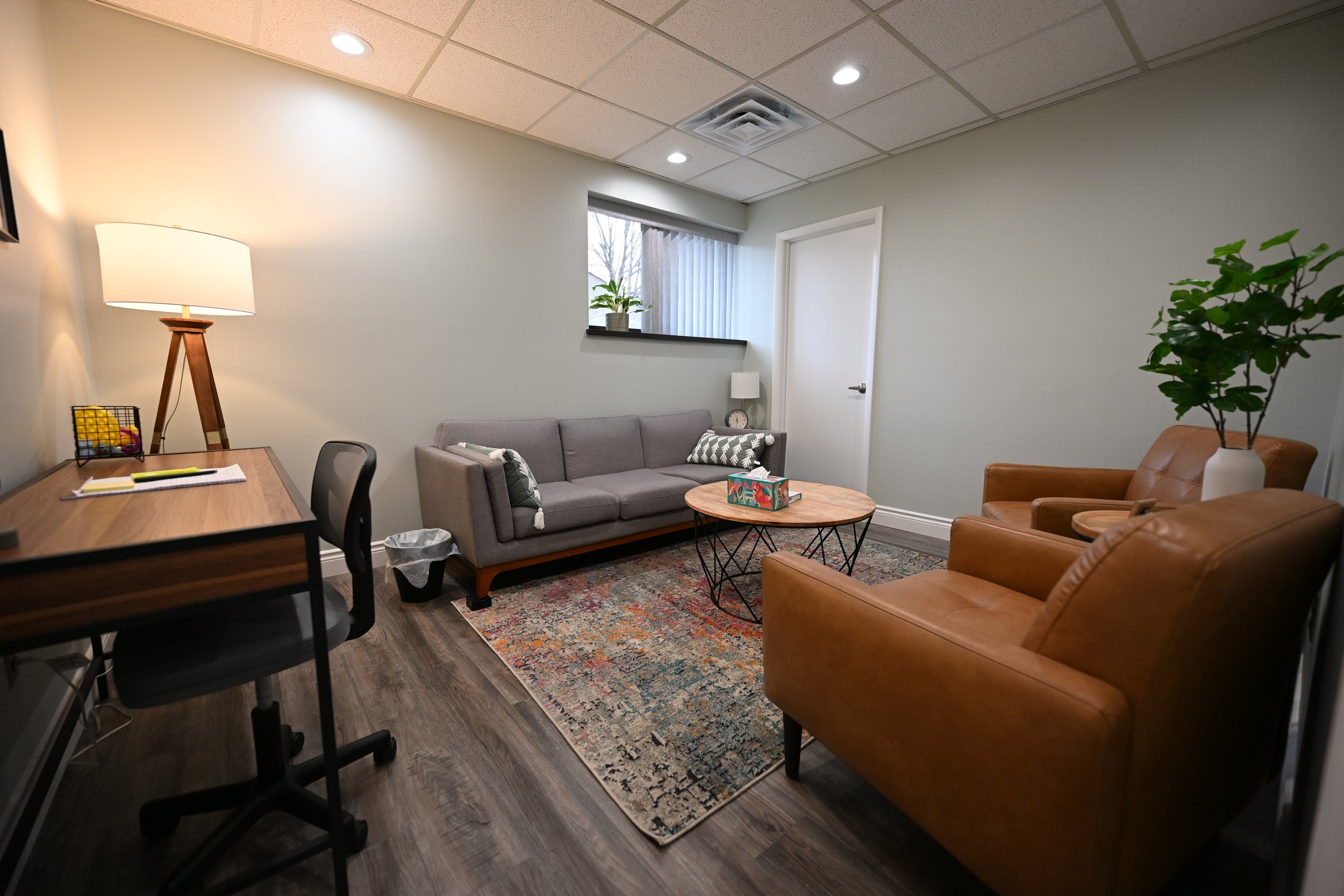
Standard individual offices feature comfortable seating—typically a clinician armchair and a supportive client sofa—along with warm ambient lighting, side tables, and subtle decor designed to put clients at ease.
For practitioners offering couples counseling, family therapy, or group support sessions, seating capacity and layout versatility are paramount. Group therapy suites must accommodate 7 to 10 participants comfortably without feeling cramped. Modular furniture, accent chairs, and spacious floor plans allow you to transition seamlessly between individual consultations and multi-person workshops. When browsing our rentable therapy space, look for configurations that adapt easily to your specific group dynamics and caseload size.
Specialized Rooms: Play Therapy, Bodywork, and Somatic Modalities
Specialized clinical interventions require purpose-built environments:
- Child and Adolescent Play Therapy: Requires durable, easy-to-clean flooring, safety play mats, low-profile shelving, and dedicated space for sand trays, art supplies, and therapeutic toys. Quick access to waiting areas for parents is an added operational benefit.
- EMDR and Trauma-Informed Care: Benefits from adjustable lighting dimmers, strategic furniture placement for bilateral stimulation equipment, and extra acoustic buffers to foster emotional safety.
- Somatic and Bodywork Practices: Requires rooms that can accommodate hydraulic or stationary massage tables, yoga mats, weighted blankets, and acoustic instruments such as sound bowls or chime sets.
Always ask facility managers about equipment storage policies. Having dedicated on-site lockers or storage bins allows you to keep specialized testing kits, sand trays, or somatic tools securely on-site without transporting them back and forth between sessions.
Essential Amenities for Privacy, Comfort, and Telehealth Support
Client retention and positive clinical outcomes depend heavily on the environment you create. A professional setting builds trust from the moment a client steps through the front entrance.
Acoustic Privacy and Confidentiality Features
In mental health settings, sound privacy is an absolute legal and ethical necessity under HIPAA guidelines. When touring rental facilities, examine the soundproofing measures closely:
- Sound-Sealed Doors and Sweeps: Solid-core doors equipped with perimeter acoustic seals and automatic bottom sweeps prevent sound from leaking into hallways.
- Acoustic Insulation: Double-layer drywall with Green Glue or sound-dampening insulation inside interior partition walls prevents room-to-room transfer.
- Active Sound Masking: Commercial white noise and sound-masking systems positioned in waiting rooms and common corridors blur speech clarity for anyone outside the room.
- In-Room White Noise Units: Individual sound machines placed near doors provide an extra layer of privacy for sensitive discussions.
Technology, Access Control, and Digital Check-Ins
Modern practices rely on digital infrastructure to run smoothly. Top-tier rental locations incorporate:
- Dedicated Provider Wi-Fi Networks: High-speed, encrypted connections separate from public guest networks to ensure HIPAA data security and smooth telehealth video streaming.
- Keyless Entry and Mobile Access: Digital keypad codes, smartphone apps, or key fobs that let clinicians access suites 7 days a week, from early morning to late evening.
- Contactless Client Check-In: Waiting room kiosks or QR-code mobile check-in systems that discreetly notify you when your client arrives, eliminating loud knocking or awkward hallway encounters.
- Digital Nameplates: Dynamic digital displays outside office doors that clearly show when a room is in session.
Pricing Structures, Contract Terms, and Practice Growth Support
Evaluating the financial structure of a therapy rental means looking beyond the base hourly or monthly rate. You need a complete picture of total operating costs, lease flexibility, and the professional ecosystem supporting your business.

Hidden Costs, Deposits, and Cancellation Policies
Before signing any agreement, review the fine print for these crucial operational terms:
- Security Deposits: Flexible recurring rentals generally require a security deposit equal to one month's rent, whereas traditional commercial leases can demand three to six months upfront.
- Utility and Janitorial Fees: Ensure high-speed internet, electricity, heating/cooling, trash removal, and regular suite cleaning are included in your base rate rather than billed as separate common area maintenance (CAM) charges.
- Cancellation Windows: Understand how much advance notice is required to cancel or reschedule an hourly room booking (typically 24 to 48 hours) without forfeiting your fee.
- Agreement Flexibility: Look for month-to-month terms or short 6-month commitments that let you scale your room usage up or down as your client numbers fluctuate.
Our therapy practice mission centers on removing financial uncertainty so clinicians can direct their energy where it matters most: delivering outstanding client care.
Community Networking and Practice Referral Opportunities
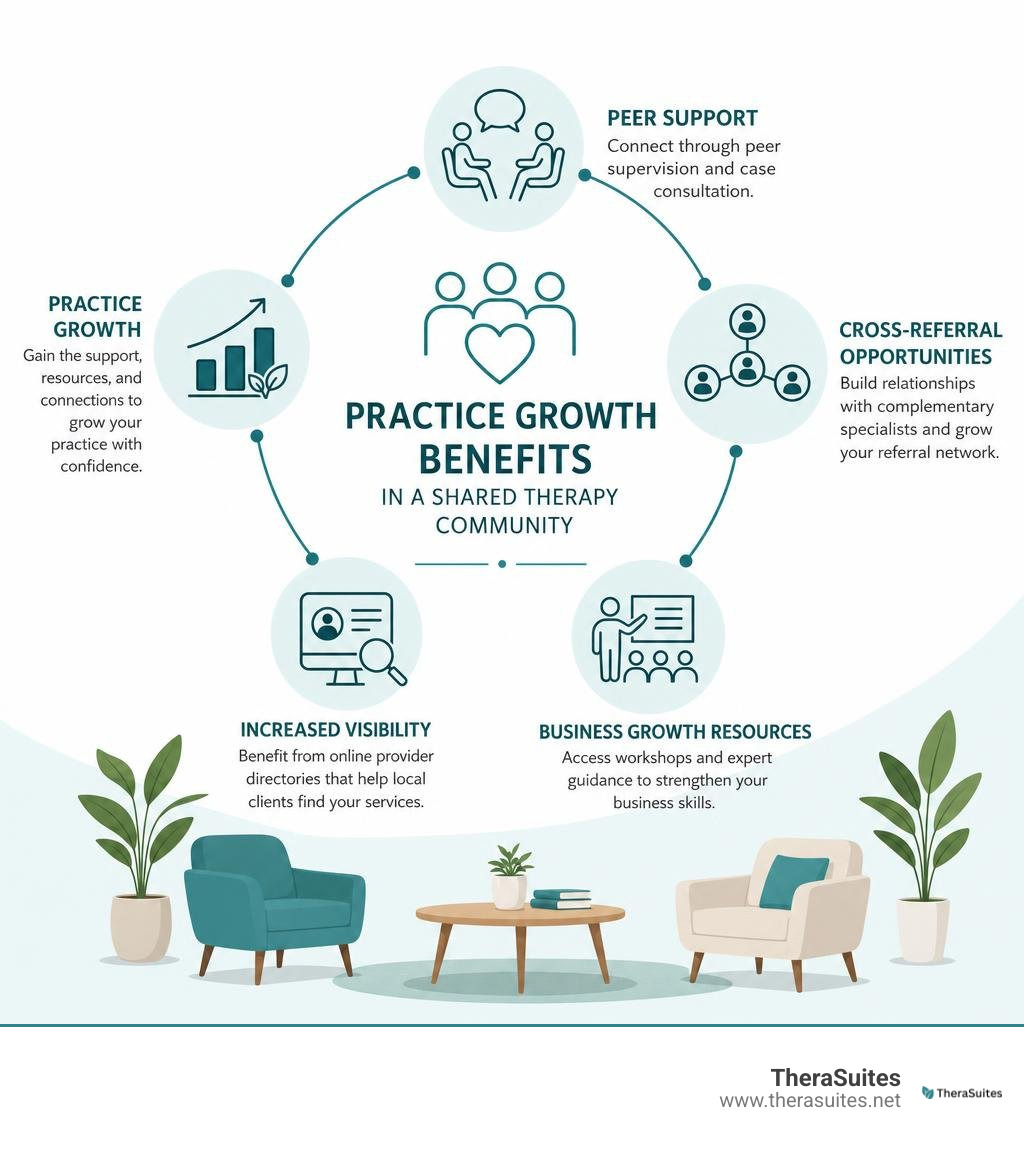
Private practice can sometimes feel isolating. Renting an office in a shared clinical community gives you built-in professional support:
- Peer Supervision and Case Consultation: Regular peer groups help you navigate complex clinical cases and stay energized in your practice.
- Cross-Referral Networks: Being surrounded by providers with complementary specialties (such as child psychologists, couples therapists, and trauma specialists) creates an organic internal referral stream.
- Business Development Workshops: Educational sessions featuring accountants, healthcare attorneys, and marketing professionals help you sharpen your business acumen.
- Online Provider Directories: Being listed on shared directories helps potential clients in your local area discover your services.
Connecting with fellow members at Therasuites Livonia allows you to build meaningful professional relationships while growing your client base.
Frequently Asked Questions
What should I look for in soundproofing when renting a therapy office?
Ensure the facility features solid-core doors with perimeter seals, sound-insulated drywall, and active sound masking systems in waiting areas and corridors. In-suite white noise machines add another reliable layer of confidentiality. If you want more details on physical privacy standards, check out our FAQ page.
How do hourly and daily booking rates compare for private practices?
Hourly rates ($30–$80/hour) offer total flexibility without ongoing commitments, making them ideal for seeing a few clients a week or running hybrid schedules. Recurring day blocks ($400–$1,200/month for 1–3 days per week) lower your average cost per hour and guarantee your preferred room schedule every week.
Can I run a hybrid practice using rented therapy space?
Yes. Hybrid practitioners often conduct virtual sessions from home a few days a week while booking dedicated office days or hourly blocks for in-person clients. High-speed, secure Wi-Fi also allows you to conduct telehealth appointments directly from your rented suite between in-person sessions.
Next Steps for Finding the Right Therapy Space
Choosing the right therapy space is one of the most important business decisions you will make for your private practice. By balancing lease flexibility, sound isolation, modality-specific layouts, and modern technology, you can build a sustainable, professional practice while keeping overhead low.
TheraSuites offers turn-key, fully furnished office spaces and comprehensive practice support for mental health professionals in Livonia. Benefit from professional business addresses, custom member profile pages, mail forwarding, high-speed private Wi-Fi, and a collaborative network of peers. Join Now to schedule a tour and find the ideal space for your growing practice.